Showing posts with label JACT. Show all posts

Wednesday, June 04, 2014

Classics Bucket List


When you first became interested in Classics, did you have certain goals? Perhaps you dreamt of reading Homer in the original Greek? Or of learning to scan lines of Virgil? Did you hope your Classics degree might give you a grasp of Greek philosophy or insight into Roman politics? Did you imagine yourself doing certain things? Wandering ancient ruins in the shimmering heat of the Mediterranean sun? Drinking retsina under a grape arbour at dusk on the coast of some island? Swimming in the same dark waters sailed by Odysseus and Cleopatra?


How many of those dreams and goals have you realised? Maybe it's time to take stock. To ponder which can be ticked off a list and which can stay on. When I was thinking about this talk, I sent out a tweet asking Classicists what goals they still had. 80% of the answers were intellectual: e.g. to memorise a speech, learn a language, grasp a concept. Only 20% had to do with physical activity, usually a pilgrimage to some ancient site or trek along some famous road. We Classicists exist so much in our heads that I thought I would make most of the items on my list about the physical tasks rather than mental goals. My aim with this list of suggestions is to encourage you to use all five senses to reconnect with your original dreams and goals, so you can be inspired and inspire others. 

1. MEMORISE A PASSAGE - Learning something by heart is a precious thing. Memorise a speech or poem in Latin, Greek or Hebrew. Not only will you inspire your students, you will have something to recite when you find yourself in an ancient Greek theatre with those famously excellent acoustics. And a speech or poem is always more impressive than saying testing one two three when you’re trying out a microphone. Best of all, the passage becomes part of you. Tip: Recite it every morning while doing your push ups and crunches.

my kylix from the Vatican giftshop
2. START COLLECTING ARTEFACTS - It’s always fun to collect replica artefacts that you can play with and use in class. I like to buy one at every ancient site I visit. This can be costly at times, but it gives you a entry into the mindset of ancient Greeks or Romans as your teeth click on the ceramic rim of a kylix or as you hold a guttering oil lamp at night. Artefacts are an amazing way of bringing a text alive, of transferring knowledge from your head to your heart. The physician’s cupping instrument taught me about the four humours, the strigil about the baths, the sponge-stick about Roman hygiene.
my replica strigil and oil flask
3. TAKE YOUR STRIGIL TO THE BATHS - In Rome last year, I met two experts on ancient Roman thermae or baths. Neither one of them had ever been to a hammam or public bathhouse of any kind! How can you study Roman baths without ever trying out the nearest thing? A trip to a Turkish bath or hammam can be a sensory revelation. In a hammam in the old town of Fez, I once saw a boy shovelling sawdust into the underfloor furnace, just like a Roman hypocaust. I went to another Fez hammam at night and the electric lights glowed in the steam like oil-lamps. I almost fainted after the hot room because I got up too fast. With its cream and apricot marble and dome pierced with elaborate steam vents, Cağaloğlu Hamamı in Istanbul is so opulent that a visit makes you feel like a Roman emperor or empress. Tip: You don't have to go to Morocco or Turkey, there is a Roman Bath in Bayswater with rooms marked tepidarium, caldarium and laconicum. Take a flask of oil and your replica strigil to the Porchester Spa

Man on Market Street, San Francisco
4. TRY CUPPING - Cupping teaches you about the four humours, one of the ancient mindsets we've forgotten. The cupping instrument was such a common aspect of Greek and Roman life that doctors often hung replica ones outside their surgeries or put reliefs of them on their tombs. But many classicists wouldn't know a cupping vessel if they saw it. Cupping was designed to balance the humours bringing you back to health and stability. Reading Book VI of the Iliad, I suddenly realised that Hector is melancholy by nature and Paris – likened to a leaping stallion – is sanguine. Tip: Your local Chinese doctor or Acupuncture technician can do dry or wet cupping. 

Chris Lydamore
5. THROW A POT - I once attended a workshop in London where children in inner city primary schools were asked to make amphorae from plastic cups, masking tape and balloons! This was supposed to give them an grasp of the shape and function of amphorae in the ancient world. Arghh! How much better for them to have seen a potter at work or even had a go themselves to get a feel for the manufacture of real pots and jars. I was lucky enough to take pottery in high school. I still remember the feel of the lump of clay spinning between my hands, of how you have to pump the wheel with your foot making your thigh ache after a while, of how a pillar of wet clay grows and wobbles and tips if you haven't centred it. The slippery feel of clay water, the leathery texture of a partly dried pot, the chalky texture of a cup painted with glaze before the firing and its delightfully glossy durability afterwards. Tip: Your local community college or City Lit (in London) should offer courses in pottery or ceramics.


The Cambridge Greek play in 2013
6. ATTEND (OR STAGE) A GREEK PLAY - Oxford's Armand d’Angour dreams of seeing an authentic reconstruction of an Ancient Greek tragic chorus. He’s hoping to stage one himself in 2015. Those of you who are teachers have a captive cast and crew. You could always do an adaptation or a musical version. In Cambridge last year, I saw a superb double bill of Prometheus and The Frogs by Helen Eastman and others.  Personally, I would love to see the ancient version of a pantomime, in which a single pantomime dancer wearing a mask would dance out a story sung by accompanying musicians. We don't have any surviving examples, unfortunately, but you could put your own interpretation on it. 

with Andrew Ashmore 
7. TAKE PART IN A RE-ENACTMENT - You don't have to be in the front line. Re-enactments are not always about fighting. Sometimes they're about dressing up. You can be a poet or scribe or camp follower. If you don't take part in one, try to attend one. Wander from stall to stall, event to event. Talk to the re-enactors. They have insight into the classical world that can only be gleaned from sleeping in a field under a leather tent or cooking recipes from Apicius on a coal brazier or wearing a chain mail shirt all day. Tip: The British Museum and Museum of London stage regular re-enactment events. Check out this film clip about Gladiator Games held in London's Guildhall Yard. 


Ben Kane walks for charity
8. GO ON A PILGRIMAGE - Ray Laurence, professor of Classics at the University of Kent, tweeted his dream of following the Via Flaminia from Rimini to Rome. Liz Gloyn would walk Hadrian's Wall. Classics teacher Andrew Christie from Rugby School has the grand ambition to follow the footsteps of Alexander the Great. But why not aim high, like Andrew? You only live once. If you need an excuse to attempt a pilgrimage, why not go on a sponsored walk as author Ben Kane recently did. He and some dedicated friends walked from Capua to Rome in full armour! Tip: train for this one. 

Ostia Antica, numinous and magical
9. VISIT AN ANCIENT SITE - Have you stood in the ruins of Troy or climbed Vesuvius? Cambridge professor Mary Beard would like to go to Palmyra and Mons Porphyritus. Oxford professor Llewelyn Morgan dreams of climbing Mount Ilam in Pakistan. American Latin teacher Edward Zarrow wants to take his kids to Leptis. Many of my friends claim their interest in the subject was first sparked by a visit to an ancient site, not always an exotic or glamorous one. Tip: Ostia Antica is my favourite ancient site in the whole world. It has an almost numinous quality and is only an hour from Rome by train.


Santa Lucia fishing village in Naples
10. VISIT A CITY WITH A CLASSICAL HERITAGE - After many years of avoiding Naples, my husband and I spent a week there on the advice of Professor Andrew Wallace-Hadrill. We stayed in the peaceful Santa Lucia district – a hidden fishing village at the foot of the Castel dell'Ovo – and we fell utterly in love with the city. Vibrant, crowded, full of superstition and joie-de-vivre, Naples is probably the closest I will get to travelling back in time to Pompeii. Sadly, many Classicists avoid Naples apart from a half-day visit to the National Museum. Athens is another city that has a reputation of being hot and crowded, but if you go off-season, it can be a thrilling experience. We are living in a golden age of air fare and from the UK you can get to Classical cities more cheaply than any at other time in history. Tip: EasyJet.

Puy du Fou near Nîmes in France
11. ATTEND A BULLFIGHT OR CHARIOT RACE - You can't go back in time to the Colosseum for beast hunts and gladiatorial combats or to the Circus Maximus for chariot races. But the closest equivalent to a day in the amphitheatre is a day at a bullfight. If the idea of watching a bull being slaughtered offends you there are bullfights in France where the bull is not killed. This can be an eye-opening experience. The shape of the arenas is the same. Bull stadia are often draped in garlands, as we know the Colosseum was. You can rent a cushion and buy a snack, just like in Roman times. The most important person sits at the shady end of the oval nearest the sand (Latin harena = arena, of course). Dead animals are dragged off with hooks and the bloody sand raked over. Music was played then and is played now. Less evocative are modern chariot races. Health and safety means we will never legally watch twelve four-horse chariots race round a track at breakneck speed, but the Puy du Fou in France probably comes closest. Tip: You need a car for the Puy du Fou but not for the Great Roman Games at Nîmes. Just fly to Nîmes, get a bus to the city centre and you're there!  

The Amber Fury
12. WRITE A NOVEL OR SCREENPLAY - As a Classicist, you have enough insight and knowledge to write a book. Maybe you will write the next Eagle of the Ninth or The Last of the Wine. It could be a child’s picture book about the Trojan Horse, your own translation of Catullus' Love Poetry, or a tongue-in-cheek re-telling of Homer's Odyssey in the style of The Diary of A Wimpy Kid... Oh wait! That's been done. Classicist Natalie Haynes has recently written a contemporary novel based on a Greek tragedy template: The Amber Fury. Or, if a novel doesn't appeal, You could write a screenplay based on a updated Greek myth or re-telling of a fascinating incident from history. I am currently kicking myself that I didn't think of Ruby Sparks, the Pygmalion story from a writer's point of view, or Mark Wahlberg's upcoming The Roman, a filmed version of teenage Julius Caesar's abduction by pirates. If you're really ambitious, why not map out a whole TV series about Theseus or Hadrian? Tip: Find a good story structure method, like Save the Cat.

So those are 
my dozen suggestions of things you might want to do before you KICK THE BUCKET. If you don't like them, come up with your own! 

Tweet me @CarolineLawrenc to let me know how you get on. Oleave your suggestions in the comments section below.  Bona fortuna! Good luck!

P.S. My personal bucket list:
1. To memorise twenty lines of Homer's Iliad
2. Acquire a replica bronze age helmet with lining and crest
3. Take a pottery class and make a Geometric cup
4. Take part in a real Roman banquet, reclining on couches
5. Watch a Roman pantomime (or something close to it)
6. Climb Mount Vesuvius to the crater
7. Spend the night among the ruins of Troy
8. Visit Jerusalem
9. Witness a chariot race at Puys du Fou
10. Write an HBO television adaptation of the Aeneid

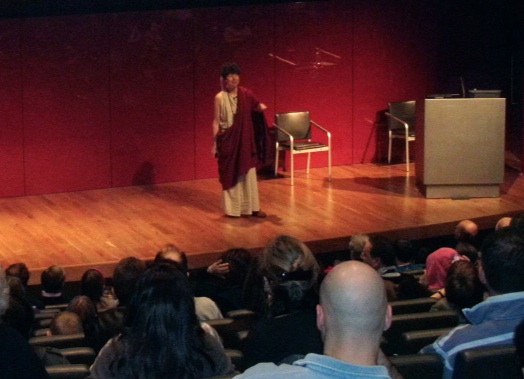
[This post is based on my presidential address at the JACT AGM and conference in May 2014.]

Monday, May 20, 2013

The Four Humours and Classical Networking

communication tablets, old and new
This was my "Presidential Address" to JACT, the Joint Association of Classics teachers in May 2013. JACT has now merged with the Classical Association

As a writer and Classicist, I'm hugely excited about Twitter, Facebook and other internet platforms as vehicles for networking and sharing information. In this address I hope to inspire you to explore these new media.

Last weekend I sent out a tweet asking Classicists WHAT HOOKED YOU ON CLASSICS? Answers ranged from one Tweeter (@ViolentCashews) who first heard Hadrian’s poem Animula, Vagula, Blandula "on the wireless over fifty years ago" to a younger fan (@JennyD_85) who loved Xena the Warrior Princess on TV. The hooks fell into seven main categories:

image sent to me via Twitter
1. Encountering primary sources in translation
2. The Greek myths retold
(Robert Graves almost merits a separate category)
3. TV, movies or plays
(I, Claudius almost merits a separate category)
4. Historical novels
5. Visits to Ancient Sites
6. Inspirational Teachers
7. Enthusiastic Parents

Four archetypal characters
I have a particular affinity for reason #4 because it was a novel set in Classical Greece that set me on the path to Classics. I loved the 1966 film A Funny Thing Happened on the Way to the Forum and a magical afternoon spent in Ostia Antica when I was sixteen. But what hooked me on Classics was Mary Renault's masterpiece The Last of the Wine. (I've written at length about it HERE.) It planted an obsession to know what the ancient world of Greece and Rome were really like. My new-found passion took me to U.C. Berkeley, and from there to the UK, where I studied at Cambridge, then SOAS and finally UCL.

A dozen years later I was teaching Latin in London at primary school level and loving it. In 1999 I had a lightbulb moment: I would write a series of history mystery stories that would transport children aged 8+ back to ancient Rome the way Mary Renault transported me back to 5th century Athens. My original concept was "Nancy Drew in Ancient Rome". (Nancy Drew is the hero of a popular American series of children's books about a girl detective still in high school). I wanted the books to appeal to boys as well as girls, so I decided to give my Roman girl detective three friends, each one based on a mythic archetype. I called my Roman Nancy Drew "Flavia Gemina" and gave her Nubia the ex-slave as a Faithful Sidekick, Jonathan the Jewish next-door-neighbour as the Funny One and Lupus the mute beggar boy as the Wild One.

My newly-invented four characters immediately made me think of the four elements: air, earth, fire and water. I had just seen a film called The English Patient by Anthony Minghella and it struck me that each of the four protagonists in that movie represented one of the four elements. Katharine Clifton, the character played by Kristin Scott Thomas, was always shown in water: the bath, the pool, the cave of the swimmers. In fact the opening image of the movie is her hand painting watercolours. So her element is obviously WATER. Katharine is in love with Count Almásy who will be horribly burnt in a plane crash: his element is obviously FIRE. And of course fire and water don’t mix. Then I noticed Hana, the Juliette Binoche character, was very grounded, in one scene she has her hands in the EARTH.

The fourth main character is the Sikh sapper. Kip must be AIR. Remember the scene where he lifts Hana up to show her frescoes? I was so taken by this idea that read the book by Michael Ondaatje to see if I was right, but there was no sign that the author had assigned one of the four elements to each of the characters. This must have been Minghella’s touch of genius.

I was creating my own characters at this time and I knew that the Ancient Greeks and Romans believed the world was made of four elements: Earth, Air, Fire and Water. I thought it would be fun to assign each of them one of the four elements. I made Flavia AIR, Jonathan EARTH, Nubia FIRE and Lupus WATER. Each of these elements related to their temperament or backstory. I even based their eye and tunic colours on these four elements. I matched their astrological signs to their element, so that Flavia Gemina is a Gemini born in the spring, the season that goes with AIR.

In December of 2000 I visited the British Museum one Saturday – just by chance – and found the newly unveiled Great Court crowded with Romans at stalls: doctors, legionaries, potters, scribes, even an emperor (Vespasian). They were re-enactors in armour and togas, tunics and pallas, the cloth dyed with real vegetable dye. They had fabulous replica artefacts like beauty products, writing materials, and medical equipment.

Chris Lydamore and Nodge Nolan in 2000
I stopped by the stall of a bearded man with a Celtic look and asked what a bronze bell-shaped cup was used for. The re-enactor, Nodge Nolan, told me it was a bleeding cup, a Roman doctor’s most commonly used instrument. If you were walking down an ancient Roman Street and saw one of these hanging above a door you would know a doctor lived and practiced in that house. The doctor would put a piece of burning lint in the cup, clap it on the patient’s back (or wherever else it might be needed). Immediately the burning lint would suck up the oxygen and go out, causing a vacuum. Dry cupping was performed on unbroken skin to draw out vicious humours and especially wind; wet cupping covered a wound or deliberate incision, and drew out blood, pus and other body fluids.

My replica bleeding cup
There is nothing like holding an ancient artefact in your hand for bringing the past alive. I started looking into cupping, which led me to an investigation of Roman medicine. My seventh Roman Mystery, The Enemies of Jupiter, takes place during a plague and fire in Rome, so I took the opportunity to find out about the four humours. The basic theory – first clarified by fifth century BC Polybus – is that each person's temperament is determined by which of the four humours they have in excess.

Too much blood = sanguine (energetic, optimistic, friendly, flighty)
Black bile (often in stool) = melancholic (pensive, pessimistic, perfectionist, sensitive)
Phlegm or mucus = phlegmatic (calm, loyal, steadfast, passive)
Yellow bile (often in vomit) = choleric (hot-tempered, leader, impatient, driven)

These four humours didn’t just tell you why you were the way you were. They linked you to a world of four seasons and explained why you were susceptible to different diseases. An illness or malaise was caused by an imbalance of humours.

So you could take away the excess humour by purging from above (a vomit) or below (an enema). You could bleed the patient (phlebotomy) or you could do wet or dry cupping. This is where the "bleeding cup" comes in.

a dermal or "plum-blossom" hammer
In the name of research, I decided to try a modern version of wet-cupping. I went to a Chinese acupuncture doctor in Wimbledon. In the modern version of bleeding you take off your shirt and lie down on your stomach. The doctor will tap your back with a so-called "plum blossom hammer". It has seven little nails protruding. Then he will place glass cup over the holes, attached a pump and suck out a small amount of blood from several places. I was fine when I went in but the next day I came down with a fever. So maybe there is something in it!

dry-cupping in San Francisco, 2005
As well as blood, you can us wet cupping two draw out pus and other fluids. Then there is “dry cupping” which sucks out the invisible humours. I was in San Francisco a few years ago, walking down Market Street and I saw a practitioner treating people right out in the open. Celebrities like Jennifer Aniston and Gwyneth Paltrow have also had it done and tabloids love to show the results.

It's all about balance. So in addition to TAKING AWAY an excess of humour via vomit, purge, dry-cupping or wet-cupping, you could also ADD to the mix through diet. Hippocrates famously said, “Let food be thy medicine and let thy medicine be food.” The ancients assigned every type of plant or animal food its humour. For example, if you are feeling listless and depressed have spatchcock, or grilled rooster! This bird is choleric (dry and hot) and will balance your excess of black bile or phlegm.


In the ancient world, even non-food animals were assigned temperaments. For example, cats were thought to be "melancholy" in the medieval period.

More recently, an American counsellor named Gary Smalley renamed these classifications in a more kid-friendly way. According to Smalley, otters are sanguines, beavers are melancholies, golden retrievers are phlegmatics and lions are choleric.

the quiz
If you are still not sure which temperament you are, take my Roman Mysteries quiz: Which Temperament Are You?

Of course the truth is that we are often a combination of all these humours. But this pervasive philosophy of balance and the four humours might be part of The 10% Surprise we would get if we could really go back to Ancient Rome. This concept of four humours permeated the whole world.

The four humours even made it into the Circus Maximus where each of the four factions had four colours and represented a season.
Greens = spring = AIR = sanguine
Blues = autumn = EARTH = melancholic
Whites = winter = WATER = phlegmatic
Reds = summer = FIRE = choleric

With that in mind, I’d like to share the four elements of the internet, which invisibly permeates our modern world.

one of the many delights of Twitter
AIR = TWITTER. I reckon sanguine "otters" with their flighty, friendly, optimistic, sometimes superficial nature are the best users of Twitter. It is an amazing way of communicating instantly. I have sometimes tweeted the exalted Queen of Classics, @WMaryBeard, and had an answer back in under a minute. Twitter is a great leveller. When people tweet me I don't know where they are, how old, what gender, how educated. I treat them all the same. Thanks to Twitter I have made contact with teachers like @McClure_Anna at Gordonstoun in Moray or professors like Sara Owen @ssorn10 of Fitzwilliam College, Cambridge who have invited me to speak at their schools or colleges. I also discovered Cumberbatch Otters via Twitter.

Four Classical tweeters out of hundreds you should follow on Twitter:
1. @Classical_Assoc
2. @AdrianMurdoch
3. @RogueClassicist
4. @ClassicsColl

Aeneas on the Tabula Iliaca
EARTH = The foundation of social networking has got to be FACEBOOK. It will have links to blogs, websites and articles. You can tailor make it to your liking. Through my personal Facebook account I’ve been able to put names to the faces of my re-enactor friends I see every two years or so. They’re interested in what I’m interested in: the concrete reality of living in another world. We exchange photos, ideas, news of events. Through Facebook I first heard of a first century Roman graphic novel – the Tabula Iliaca – on marble of the Fall of Troy. This was via a post on Facebook by Steven Saylor who writes the fabulous Roma Sub Rosa mystery series for adults with a detective called Gordianus the Finder.

Four of my favourite blogs are:
1. Pop Classics - Juliette Harrisson talks about Classics in pop culture
2. Bestiaria - Latin Proverbs and Fables Roundup
3. The Classics Library with it’s Latin Qvarter zone
(featuring readings of Latin poetry like this lovely Ghost of Creusa)
4. Mary Beard’s A Don’s Life

Christopher Francese recites Latin
WATER = PODCASTS aren't strictly social networking, except that I can put myself in a Stanford classroom, recite Latin poety with Christopher Francese, exclaim OMG! to Melvyn Bragg and listen to my Facebook pal Natalie Haynes enthuse about Juvenal. Whenever I am feeling frazzled, I put on a podcast and go for a walk. It's as refreshing as a plunging into a swimming pool full of water!
(*phew!* I worked in the element.)

Four of my many favourite podcasts are:
1. Susanna Braund’s fabulous Stanford iTunesU course on Virgil’s Aeneid
2. Christopher Francese’s Latin Poetry podcast from Dickenson College
3. Melvyn Bragg and friends on The Four Humours
4. Natalie Haynes on Juvenal for Great Lives

FIRE = Instead of watching a flickering fire, we've got YOUTUBE. This is hugely popular with young people: your students and my readers.

Here are just four of a huge selection of YouTube clips:
1. Roman Mysteries TV series episode 1 opening sequence
2. Horrible History sponge-stick sketch
3. computer-generated reconstruction of Ostia Antica
4. Boris Johnson reads Armand D'Angour's Olympic Ode in Greek

Alongside virtual networking, there’s also real networking.

Caroline, Mattia and Andrew W-H
1.TRAVEL.
Try Andante Travels. They aren't cheap but you will get to see parts other tourists never reach with guides like Professor Andrew Wallace-Hadrill. They also have a "Bare Bones" budget programme. I travelled with them in January and am now friends with Mattia, a Pompeii-born guide who has shown celebrities like President Clinton, Leonardo di Caprio and "Mary" Streep around the ruins.

2. LITERARY FESTIVALS
Mary Beard is now a fixture of at many literary festivals. Tom Holland is charmingly ubiquitous. Writers of Classical Historical Fiction attend to promote their books and talk about how they do research and get ideas. One festival I would like to plug is the Heffers Classics Festival. Martin Brown and his helpers have put together a fabulous line-up of Classicists and historical authors for a one-day Classics festival full of short and pithy talks. Contributors include Classicists Mary Beard, Charlotte Higgins, David Mattingly and William Fitzgerald, just to name a few. Historical fiction authors Simon Scarrow and Lindsey Davis will share a platform for the first time. And there will be a Balloon Debate to determine which character from Classical Mythology should be tossed from a hypothetical balloon. This features the outgoing JACT president Paul Cartledge as Argus, the incoming JACT president (me) as Andromache, and also Ruth Downie as Dido, Harry Sidebottom as Hector and humorist Natalie Haynes as Oedipus! You can see the lineup HERE.

Caroline in costume at the BM
3. MUSEUMS
There are museums with Classical collections all over the country. I am particularly familiar with the British Museum and the Museum of London. Both provide a cornucopia of lectures and exhibitions, not just for adults but for children. A few weeks I ago I was at the Museum of London, helping introduce a new Romano British Archaological website called Romans Revealed to kids in year 3. Next week at the British Museum I will be giving two free talks geared to families with kids aged 7+, one on Animals in Pompeii and Herculaneum, the other on Children in Pompeii and Herculaneum.

Zane with Horace Ode
4. LIVING HISTORY
I have probably derived more inspiration from talking to re-enactors and playing with artefacts than through any other medium, except books. Nodge Nolan told me about bleeding cups and gave me my talisman, the notorious sponge-on-a-stick. Sally Grainger showed me how to cook. Zane Green demonstrated all sorts of writing implements and gave me Horace's famous Carpe Diem Ode on papyrus. Especially for children at primary level, there is no better way into the subject than to let them handle a replica Roman artefact (or a real one if it is possible), guess what it was used for, and then discuss it. Artefacts have inspired several storylines in my Roman Mysteries series of books.

Finally, I need to mention the best Classics apps I have found for iPhone , iPad and iPad touch: they are all in the stable of Paul Hudson's SPQR range.

Stories console us and transport us to other worlds. History teaches us who we are. The discipline of learning Latin and Greek prepares us to learn any language and trains our mind to other ways of thinking. Classics combines all three of these aspects. This is probably why so many of us love it.

Our calling as teachers is to introduce others to the world of Classics and to give them the resources they need to teach themselves. But to do this we need to keep being inspired and enthusiastic ourselves. So let's embrace the four elements – and more! – of Classics networking to keep in touch, to encourage and inspire one another.

This is a tweaked version of Caroline Lawrence's Presidential Address at the JACT AGM on Saturday 18 May at Manchester Grammar School. JACT merged with the Classical Association two years later in 2015.