Wednesday, May 20, 2015

Story Cakes

Stories are like cakes.
 

They nourish, comfort and console us. They delight us with their flavour, colour and texture. We eat up the words with the mouths of our eyes. Some stories give us a sugar rush. Others have an aftertaste that lingers. Some are dry, others moist. Some are light, others dense. But we always come back for more. 

Like the EAT ME cake from Alice in Wonderland, stories can transform us. They take us to other places and times. They put us inside the heads of other people or even creatures. They teach us empathy. This is how they feed us and help us grow. 

If stories are like cakes, writers are like cooks. 

Some writer-cooks plan their project in meticulous detail. We start with a recipe and carefully measured ingredients: one good opening sentence, one problem, one strong desire, one fascinating foe, one plan, one faithful friend (or pet), a handful of other allies (to taste), one big battle near the end and one Lesson Learned. Sometimes – but not always – we add a mentor, a talisman and a journey. We salt it with humour and we frost it with sensory details. 

Other writer-cooks create by pure instinct. They waltz into the kitchen of their imagination, throw some ideas in a mental bowl, stir them up and bake them in the oven of inspiration. And voilà! They have created a masterpiece, seemingly without effort. 


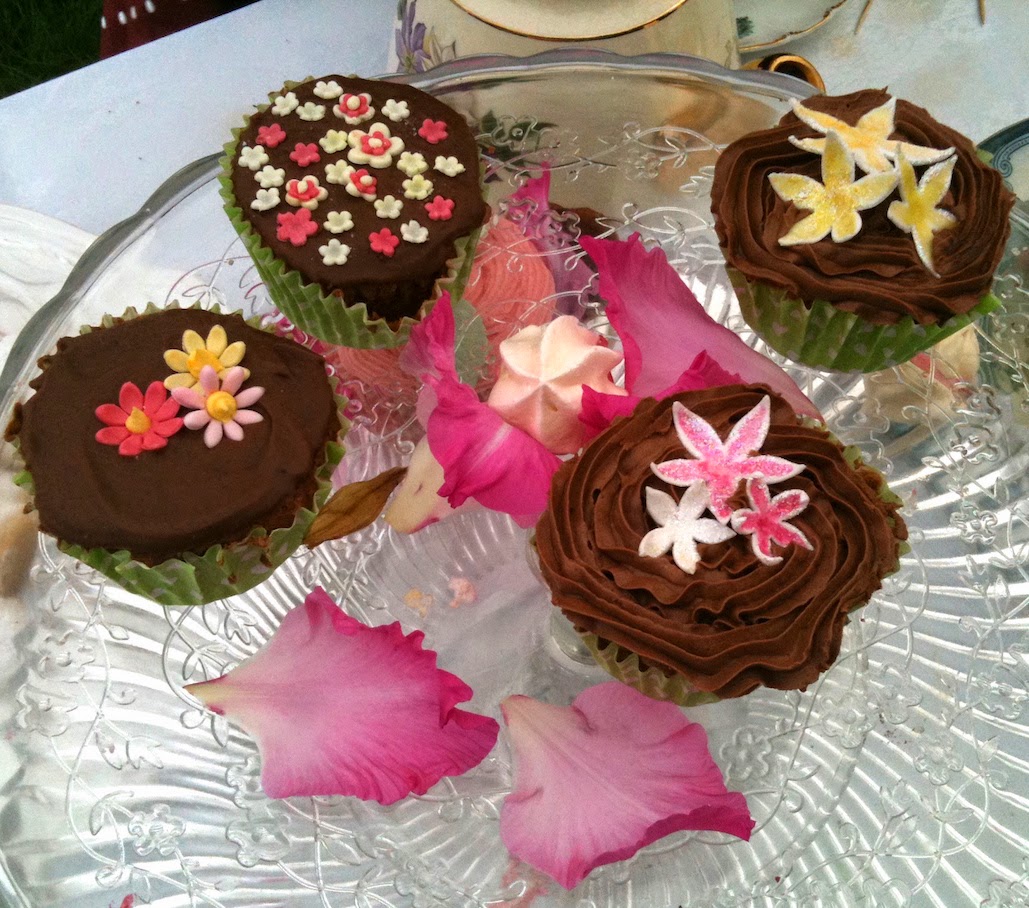
In Daunt Books Children's Short Story Competition (a collection of the sixteen winning short stories from their 2015 competition) you will find some delicious stories baked by cooks aged four to fourteen years. 

Piper, eight, has created slice of double layer cake with lavender frosting and a flavour of Japan.

Fourteen-year-old Alexandra combines rose petals, orange juice, purple paint and glitter into a deliciously evil concoction.

Joey – only five! – has baked a comforting marmalade scone: warm and fluffy, and perfect for tea. 


Caterina’s creation incorporates familiar elements – ‘a spoonful of sugar’, a picnic lunch and sour mash for a War Horse – to make something unique.

Layla, aged eight, wrote my personal favourite, a fairy cake of a fairy tale with equal parts lemony-tart wit and honey-sweet wisdom.

Twelve-year-old Ruby May’s cake has thoughtful layers of white, black and red, with a bittersweet aftertaste.

Chloe, six, has concocted a story that features dangerous cakes and meringues, but ends happily with the baking of cupcakes: one medium and one tiny.

Ten-year-old Sam has crafted a salted caramel brownie so clever it makes you laugh.

Marie, nine, gives us story about a Sherpa as chilly as the Kendal Mint Cakes that climbers often munch.

I see Will’s story as a surreal upside-down version of Baked Alaska, with a moose rather than mousse.

Maia’s confection has twin sponges separated by a buttercream layer of fantasy with candied fruit jewels on top; read it: you’ll see what I mean.

Two of my favourite elements in stories are Journeys and Surprising Heroes, so you can bet I gobbled up Charlie’s scrumptious offering, frosted to look like a five pound note.

Douglas, eight, wrote a wartime Battenberg that was thoughtful and satisfying.

Our youngest cook, Riley, aged just four, baked a charming cupcake of a story with rice-paper animals running around the outside: fish, ostrich, kangaroo, cat and a little bear.

Eliza’s slice of Christmas fruitcake includes seasonal ingredients, but combined in a tasty new way.

To round off our feast of tales, Hannah’s offering seems as straightforward as shortbread until a haunting secret twist is revealed.

Caroline with some of the winners May 2015
photo by Laura McVeigh
You’re going to relish all these stories and I have a feeling they’ll inspire you to bake some of your own. Bon appétit!Caroline Lawrence, London, May 2015. 

[This is my foreword to the volume of winning entries for the Daunt Short Story Competition of 2015. The book is available in branches of Daunt Books or you can order them by phone or email. For details of how to enter the 2016 competition, go HERE.]

Wednesday, February 18, 2015

Roman Egypt Quiz!

Caroline and fans at the Petrie 18 Feb 2015
I have just returned from the fabulous Petrie Museum in London, where I was doing a family event about Roman Egypt. The museum put on a Treasure Trail (and everybody got a signed book) but I made a more challenging quiz which I handed out at the end. One of the things I wanted to emphasise was that the Romans thought of Egypt as upside down (from our modern perspective). So here is my ROMAN EGYPT QUIZ, along with the answers (right at the bottom). Bona fortuna! Good luck! 

In Roman times, people though of Egypt as being upside down. In other words you went UP the Nile to go to Nubia, which is in the south! Also, the wind usually blew from north to south and the current flowed from south to north. Those tricky facts (and my map) will help you answer some – but not all – of the following multiple choice questions. But be careful... thinking about upside down Egypt too much might do your head in!

1. In Roman Egypt, during the first century AD, most people spoke: 
a Roman
b Latin
c Greek
d Egyptian

2. The mouth of the Nile resembled 
a the Latin capital letter V
b the Greek capital letter delta (a triangle)
c the hieroglyphic for an eye
d the Latin capital letter O

3. As you travelled upriver in Roman times, the country on the left was known as
a Scotland
b Arabia
c Libya
d Nubia

4. When you see a picture or model of an Egyptian ship with the sail up, it is probably travelling
a upriver
b downriver
c to Rome
d to Alexandria

5. When you see a picture or model of an Egyptian ship with the sail down, it is probably travelling
a upriver
b downriver
c to Rome
d to Nubia

6. In the early Roman Empire (first century AD) the greatest city in Egypt was
a Cairo
b Crocodilopolis
c Aswan (Syene)
d Alexandria 

7. A cataract is a place where the river changes level. How many cataracts would a Roman have found travelling from Alexandria to Nubia? 
a 7
b 70
c 700
d only one, but it marked the border of Egypt and Nubia.

8. In ancient times, the great Pyramids of Giza were covered with 
a dazzling gold leaf
b thin sheets of white limestone
c sticky pitch to discourage climbing
d colourful paintings of the pharaohs

9. In Egyptian wall paintings, which three things show that a figure is meant to be a child?
a wearing nappy, dummy in mouth, no hair
b wearing kilt, open mouth, short hair
c wearing nothing, finger at mouth, one lock of hair over ear
d wearing amulet, sticking out tongue, no hair

10. Which hieroglyph was considered very bad luck:
a the crocodile king
b the anubis dog
c the ankh
d the seth animal

11. Cleopatra VII (the one who liked Caesar and Mark Antony) was not actually Egyptian by background. Her ethnic background was mainly
a Arabian
b Roman
c Greek
d American

12. Speaking of Mark Antony, his actual Roman name was:
a Marcus Antonius
b Marcus Antonius Postumus
c Marcus Antonius Superbus
d Marcus Antonius Ptolomeus

If this post has whetted your appetite for more, check out The Scribes from Alexandria, my Roman Mystery set in 1st century AD Egypt. It's available in paperback, Kindle and abridged audiobook. You might also enjoy my blog posts called Ugly Cleopatra and one called Upside Down Egypt

Answers to Roman Egypt Quiz: 1c; 2b; 3b; 4a; 5b; 6d; 7d; 8b; 9c; 10d; 11c; 12a

Tuesday, January 27, 2015

Why Study Latin?

Why Study Latin*

Parents often ask me why their children are studying Latin in this day and age.  It's a good question.

Latin is a dead language.  That means no one speaks it any more. So why on earth is it still taught?
Just because of a huge weight of tradition?  Because Daddy and Grandaddy both learned Latin? Because of its intellectual prestige? Because once it was the lingua franca of educated Europeans? 

These reasons aren't relevant anymore, but there are some real benefits to be had from learning Latin, for adults and children alike.

At the beginning of term I usually give the parents of my Latin pupils a piece of paper listing some of the reasons for learning this 'dead language':

1.  Learning Latin increases mental ability. In a recent study in America, children at a primary school were divided into two random groups. One group did a small amount of Latin per week, the other didn't. At the end of a term, the children who did Latin were doing consistently better at ALL subjects than the children who didn't do Latin. It has long been maintained that Latin helps develop logic and language skills. In fact, every few years a flurry of articles are published stating that a new study has shown the benefits of learning Latin. 

2.  Learning Latin teaches grammar and syntax. When I was at the University of London studying German with other post-graduates, it soon became evident that about half the class had no idea what grammatical terms like definite article, case and conjunction meant.  The teacher had to stop and ask how many of us wanted to review these basic grammatical terms before we started the course properly.  These were all adults with at least one University degree behind them, going on for an MA or  MSc, yet several of them raised their hands.  What did those particular students have in common?  They HADN'T studied Latin.  Those of us who had studied Latin didn't need to review grammatical terms.  

3.  Learning Latin helps us learn English itself.  One of my ten-year-old pupils, Ian, was in the hospital with an eye problem.  He noticed the word lachrymal on one of his forms.
'Does that have anything to do with tears?' he asked the staff nurse.
'Why, yes, it's the department that deals with tear duct problems. How did you know that?' she asked.
'I study Latin,' he replied.
Ian and three eleven-year-olds helped me make a diagram of the cases. (right)

Over 60% of all English words are derived from Latin (or Greek).  

4.  Learning Latin helps us learn the so called Romance Languages. A Romance language isn't one you speak with a guitar in your hand and a rose between your teeth; it's a language which developed from the language spread by Roman soldiers and colonists: Latin! Romance languages include Italian, Spanish, Portuguese, French and Romanian. Compare the Romance words for 'friend':

Latin: amicus
Italian: amico
Spanish: amigo
French: ami

and some non-Romance words for 'friend':

Hebrew: haver
Russian: dryg
Japanese: tomodachi
Swedish: vaen

It is particularly relevant, now that the UK is part of Europe, to familiarise ourselves with the cultural and linguistic heritage of the Roman colonists. :-( 

5.  Learning Latin helps you learn other 'dead languages'.  What are some other dead languages? Biblical Hebrew and Greek, if you want to be a Bible scholar. Ugaritic, Akkadian or Egyptian Hieroglyphics, if you want to become an archaeologist like Indiana Jones.  

6.  In fact, learning Latin helps you learn almost any other language, because to learn Latin you must learn HOW to learn a language.  You learn to analyse words and sentences; you learn how to memorise vocabulary; you learn to put aside preconceived ideas (based on English) of how a language should work.  

7.  For this reason, anyone who wants to be a novelist, travel writer, pilot, journalist, diplomat, missionary or international business person – in other words, someone who will need to learn other languages – would benefit from learning Latin.  

8.  Anyone who wants to become a doctor, nurse, physiotherapist or vet would benefit from knowing Latin because the parts of the body are still referred to by their Latin terms.  The word valve means 'a folding door' in Latin, the atrium in the heart is a 'hall' or 'chamber', and it's easy to picture the structure of certain bone cells when you know the word trabeculae means lattice-work.   

9.  Anyone who wants to become a gardener, botanist or zoologist would benefit from Latin.  Most flora and fauna are known by their Latin names.  In fact the words 'flora' and 'fauna' are both Latin.

10.  Finally, Latin is fun.  Learning the language is like solving a giant puzzle.  Anyone who likes crosswords, codes or cryptograms will derive great pleasure from making sense of it.  Latin literature tells of myths and battles, love stories and philosophies, comedies and tragedies, poetry and prose. Latin history is full of fascinating men and women: Caesar, Cleopatra, Hannibal, Cicero, Nero, Hadrian, Spartacus, Marcus Aurelius, St Augustine, St Jerome and many more.  

I think this last reason is the most important for the children, and just to make sure they are convinced of this point, I start off each new school year with a Latin banquet.  We spend one or two lessons discussing what food the ancient Romans or Pompeiians would have eaten. Once we have eliminated chocolate, bananas, potatoes and tomatoes, I get each student to volunteer to bring a 'Roman' food. 

On the day, we spread out a large sheet or rug to catch all the crumbs and spread cushions to recline on. We put our food on plates in the middle. For greater authenticity you could wear tunics and garlands, and have a couple of children volunteer to be slaves. We serve well-watered red and white 'wine' - grape juice in jugs - as our beverage. Then we all recline on our left side, leaving the right hand free. No forks are allowed; they were unknown in Roman times. So we eat with spoons and our fingers.  

Our Roman Banquet menu could look like this: 

Gustatio (Starters)
hard boiled eggs with salt
black olives
pomegranates
almonds or pistachio nuts

Mensa Prima (Main Course)
smoked fish
cold roast chicken
warm pitta bread and hummus

Mensa Secunda (Dessert)
grapes
figs
pistachio halva
honeycomb
honeycakes

During the banquet we each take turns reciting a poem or telling a story. Play some of Synaulia's ancient Roman music to help set the mood.
For end-of-term parties, I screen a Roman movie. My personal all-time favourite and the film I believe most accurately portrays ancient Rome is A Funny Thing Happened on the Way to the Forum

'Oh, Mother,' grumbled my teenage son the other day, 'You really shouldn't throw Latin banquets and show films; you'll give those poor kids the idea that Latin is fun.'


*This is a slightly updated version of an article I wrote way back in 1997, in the pre Minimus days when I was teaching my own ad hoc Latin course to primary school aged kids in London. Feel free to use it; I only ask that you give me credit. 1997 © Caroline Lawrence

[Caroline Lawrence's Roman Mysteries books are perfect for children aged 9 - 90. Carrying on from the Roman Mysteries, the Roman Quests series set in Roman Britain launched in May 2016 with Escape from Rome.]
Wednesday, December 17, 2014

Saturnalia Quiz!

Saturnalia storyteller at Fishbourne Roman Palace 2014
Would it surprise you to learn that many of the customs we observe at Christmas go back to Roman times and have nothing to do with the birth of Jesus? Here is a quiz for you to test your knowledge of the Roman SATURNALIA and its influence on modern Christmas.

1. December 25th has been claimed as the birthday for which deity?
a) Sol Invictus
b) Mithras
c) Jesus Christ
d) all of the above


Saturnalia revelry from Roman Mysteries TV series
2. Three days before 25 December, what event occurs?
a) Summer Solstice
b) Summer Equinox
c) Winter Solstice
d) Winter Equinox

3. Many scholars believe Jesus was actually born in:
a) late December, of course!
b) late September/early October
c) mid January
d) Philadelphia

4. The Romans celebrated a mid-winter festival called the Saturnalia. It was named after:
a) The planet Saturn
b) The god Saturn
c) Saturday
d) Satyrs


5. In the first century AD, how many days did the Romans set aside to celebrate the Saturnalia?
a) one
b) five
c) twelve
d) thirty
e) none

6. The Romans gave gifts on the Saturnalia. Which of the following did they NOT give?
a) chocolate
b) silver objects
c) preserved fruit
d) small clay or wooden figures


scene from the Roman Mysteries TV series
7. The jokes in Christmas crackers might well go back to the Roman practice of
a) hiring comic actors to deliver gifts 
b) writing a two-line epigram to accompany a Saturnalia gift
c) Roman singing telegrams (in dactylic pentameter)
d) memorizing and reciting lines from Virgil's Aeneid as a Saturnalia party trick

8. Which ONE of the following Christmas customs did NOT orignate in the Saturnalia:
a) feasting
b) drinking
c) putting up lights
d) putting up greenery
e) Santa and his reindeer
f) giving gifts
g) taking time off work


fresco from Pompeii: men playing dice
9. In first century Rome, which usually illegal practice was permitted only during the Saturnalia?
a) murder
b) theft
c) witchcraft
d) gambling
e) pantomime
f) chainsaw juggling

10. The paper crown in our Christmas cracker reminds us of the Roman custom of:
a) choosing a 'King' of the Saturnalia
b) Caesar legalizing festivities
c) the Etruscan king Tarquin
d) It has nothing to do with any Roman custom


in my Saturnalia cap
11.  Santa's red conical hat might well be traced back to hats worn during Saturnalia by:
a) Trojans
b) Greeks
c) Persians
d) Smurfs
e) freedmen

12. During Saturnalia, Romans festooned their houses with many green plants, but probably NOT:
a) mistletoe
b) pine boughs
c) wreaths
d) garlands
e) seaweed
13. Here are some more Christmas customs which might go back to the Saturnalia. Which one is bogus?
a) mulled wine
b) Christmas stockings
c) singing songs
d) pantomime

14. Which of the following foods was certainly NOT part of the Saturnalia feast?
a) roast pork
b) honey-glazed ham
c) turkey and mashed potato
d) roast goose

Answers at the bottom. 
(You might want to read my piece about Saturnalia before you try this quiz.)
Nubia and Jonathan make music in the Roman Mysteries TV series

The Answers
1. d) At different points in history Jesus, Mithras and Sol Invictus (the unconquered sun) were all assigned the birthday of 25 December  

2.
c) Winter Solstice (the shortest day of the year) occurs shortly before 25 December. 

3. b) Some scholars believe Jesus was actually born in
 late September or early October

4. 
b) The festival of Saturnalia was named after the god Saturn

5. 
b) In the first century AD the Romans set aside five days to celebrate the Saturnalia. Later it was extended. 

6. a) The Romans did not give chocolate on the Saturnalia because it comes from central America and was still unknown. 


7. b) The mottoes and riddles in Christmas crackers might well go back to the Roman practice of 
writing a short poem called an epigram to accompany a Saturnalia gift

8. e) Santa and his reindeer did not appear until Victorian times


9. d) In first century Rome, gambling was illegal except during the Saturnalia


10. e) The paper crown in our Christmas cracker reminds us of the Roman custom of
 choosing a 'King' of the Saturnalia

11. e) Santa's red conical hat might well be traced back to so-called freedom caps worn by newly freed slaves and also by many ordinary people during the Saturnalia as a symbol of freedom from restrictions


12. e) During Saturnalia, Romans festooned their houses with green plants, but probably not
 seaweed

13. b) Christmas stockings hung by a fireplace come in well after the Roman period. 

14. c) Like chocolate, turkey and potato both come from the New World and were unknown in Roman times. 

Monday, September 29, 2014

Real Fake Antiques!

photo by David Emery (see comments below!)
When we visited Ephesus a few years ago, the stallholders had made a fine art of self-deprecatingly hawking their wares. One of their cheerful shouts as tourists passed was "Real Fake Antiques!" or "Genuine Fake Watches!" The good news is you don't have to go to Ephesus to find a brilliant replica Greek and Roman antiques. 

Opposite the British Museum, on the corner of Great Russell Street and Bury Place, is a fabulous shop called It’s All Greek where you can purchase replicas of objects from ancient Greece. Artefacts inspire my writing so I often go to press my nose against the window, admiring the treasures within: busts, statues, helmets, jewellery, figurines and crateloads of pottery. There is even a replica of a kylix – a kind of cup with a very shallow bowl – that featured in my book, The Pirates of Pompeii.

Last Friday I was showing some sixth-form fans around the Roman section of the British Museum when one of them asked if you could actually drink from a kylix. I took them to It’s All Greek to find out. An offer of free mulled wine – sadly not in a kylix – got us chatting to the owner, a Classicist and ex-teacher. Elinor Wynne Lloyd showed us something I had never seen on those occassions I had merely pressed my nose against the window: a room full of treasures downstairs. Whipping out my notebook, I commenced an impromptu interview, asking her questions I thought other History Girls might ask, including what it’s like to drink from a kylix and which historical novels are her favourites. 

downstairs treasure trove at It's All Greek near the British Museum

Me: You used to teach Latin, Greek and Classical Civilisation at Queen's Gate School in London. After that you ran a teaching business called Locus Classicus. What was that?

Elinor: After sixteen years or so in mainstream teaching, I decided it would be fun to teach a greater variety of ages and needs, so I set up Locus Classicus in a dedicated room at home. I taught Latin, Greek and Classical Civilisation to individuals and small groups. One day it could be a twelve–year old who had moved school and needed to catch up with a year's Latin, the next it would be a revision class for a small group of A level Class Civ students…

Elinor Wynne Lloyd in her shop It's All Greek

I also went out and about, teaching in a small specialist London school for children with special needs. They loved Latin, and I used to take in the occasional Greek pot, bronze figurine, owl or oil lamp collected on trips to Greece over the years. Just having these things to handle, draw and talk about made a huge difference to lessons. It meant we could do a bit of work on mythology and Greek and Latin roots in our languages. 

Me: Do you miss anything about teaching?

Elinor: There are many things I miss but perhaps the most lasting memory is of taking trips to Greece. It was an amazing experience for me to see the girls' reactions to the places and works of art that they had studied at school. Gasping in disbelief after climbing the steps on the Acropolis to look up and see the Parthenon for the first time; traipsing up to the stadium in Delphi, eyes on the ground, then to turn round and see that incredible view over the site and the theatre and right down in the distance to the sea; awestruck silence at seeing a full size bronze statue…. Each time, I relived my own reactions on that formative first trip to Greece when I was 12 years old and of the passion that grew from those experiences.


Girls from Queen's Gate form a Q and G in the theatre of Epidauros in 1997

Me: In what ways do you feel you are still a teacher?

Elinor: It’s All Greek is more than just commerce. Next to each artefact nestles a little ‘information card’. If a customer wants to know more, we are thrilled to oblige! My triad of staff at the moment consists of a former pupil, a Classics graduate and a third-year Classics student!

Me: Handling replica artefacts can give insight into what it would have been like to use the original ones. Can you share anything that has particularly struck you?

large bronze tripod
Elinor: Some twenty years ago now, I wandered into a shop in Delphi, where I saw a glorious bronze tripod. At that stage I was teaching about Delphi, Apollo, the Pythia, the oracle, the tripod and the laurel. My modern Greek was rudimentary at best, but the shop owner and I struck up a conversation and together we carried the tripod outside into his little courtyard. The coals were lit, the bay leaves snipped and the ouzo was poured. I remembered then that in the Odyssey, royal storerooms were full of tripods which were exchanged as tokens of hospitality between guest and host. Here was I, in the centre of the world, watching the scented fumes rise towards Parnassus. Twenty years on, by design and coincidence, we stock that tripod at It's All Greek!

Me: Have you ever sipped wine from a kylix? What was it like?

Elinor: A potter I met in Olympia some years back was a maker of functional vases. On one occasion he handed me a shiny black replica kylix with a band of decoration around the rim and a small circle in the tondo, within which was a gorgoneion with protruding tongue. Within moments, the open bottle of Santorini Assyrtiko was being gently poured into the kylix (enough to obscure the gorgoneion) and proffered. I closed my eyes and took a sip: a little one. I knew there was an art to drinking from a kylix, a skill acquired by the Greek upper classes, so I concentrated intently on balancing the cup so as not to tip and dribble. I opened my eyes to a grin of delight from my observer. Dignity had been maintained but, what's more, during that split second, I had been there amidst the chatter and the hilarity and the imminent kottabos... [a dinner-party drinking game played by flicking the dregs of wine in the bottom of one's cup at various targets.]

Greeks playing kottabos, from a replica red-figure rhyton

Me: Do you read historical fiction? If so, can you share some of your favourite books?

Elinor: I remember my parents doing a bit of their own nurturing of my new-found passion for Greece when we returned from that first trip. They made sure that I had Mary Renault's The King Must Die and The Bull from the Sea after going to Crete and Santorini for the first time.

Me: Snap! My parents gave me Mary Renault's book The Last of the Wine when I was eighteen! It sparked my interest in Classics and determined the whole course of my life. (I have blogged about it here). We've got to go now, but I have one last question: What is your current favourite piece in the shop?

Elinor: It's so hard to choose! When people ask where is my favourite place in Greece, I suffer from the same problem. If I'm in Delphi, it's Delphi, Olympia, Olympia and so forth. The silent Kerameikos with its rustling turtles is a favourite.

terracotta turtle and other artefacts
At the shop, there is similar fluctuation: the light one morning may strike a Cycladic figurine in such a way as to take my breath away. At dusk, the brooding shadows of a replica bronze helmet makes me stand to attention. A cheeky terracotta turtle – a replica of a child's toy – makes me smile. The cast of characters is alive, each with its own story to tell.

Caroline Lawrence with replica "Eye Kylix" at It's All Greek
Me: Thanks, Elinor! History Girls and other readers of this blog might like to know they can browse and order your treasures online as well as at the shop: It's All Greek

Caroline Lawrence writes history-mystery books for children set in Ancient Rome and the Wild West. Her motivation is the same as Elinor's: to bring history alive! This post was first published at The History Girls blog. 

Wednesday, July 23, 2014

Walking from Stabia to Vico in 2000

In my previous post, I wrote an account of my visit to the Roman villas at Castellammare di Stabia in October 2000, an era before GPS on smartphones or even digital cameras. 

Up at 5.30 and out of our rented villa by 6am, I had packed in a full morning including a visit to some thermal springs, private tours of two Roman villas and breakfast with archaeologists, including wine... and it was not even 10.15! 


Waiting for a train back to Sorrento, I had a sudden thought. One of my reasons for coming to the Bay of Naples was to explore some of the places my book was set. When the volcano erupts at the end of The Secrets of Vesuvius, my young detectrix Flavia Gemina and her friends set off on foot to find refuge around the promontory. Here I am in Stabia. It's still early... Maybe I should try walking round the promontory from here, just to see if it's possible. The following are entries from my writer's notebook of Friday 20 October 2000, with just a few tweaks.


10.25 am - I decide to go for it. I walk away from the station and make a camera store my first stop. I ran out of film in the Villa San Marco and Villa Ariadne. How could I let that happen? I buy lots of film and tell the very nice proprietors that I intend to walk round the cape to Vico Equense. The man and his wife shake their heads slowly. After some discussion they admit that it CAN be done. They reckon it's about 7 kilometres from Stabia to Vico. 


10.45 am - I set off resolutely, passing the now familiar brown beach, the shipyards and the baths. At the marina I see there is another rank of pipes for mineral water. It's doing a lively if free business: Stabians are happily filling up their empty bottles with sulphur-scented or iron-tinged water. 

11.00 am - Now I am leaving town. In the cliff-face on my left are arches. They look Roman. Boat houses? Like the ones at Herculaneum? Suddenly the smell of sulphur gets me at the back of the nose. I hear running water and see water trickling down the cliff-face. 


11.15 am - I've reached the tip of a little promontory. The road is quite busy here and there isn't always a pavement. So at one point I'm walking along the top of a wall, like Clio in The Secrets of Vesuvius

11.20 am - I've discovered some complex. An old hotel or resort? Huge lumps of black volcanic stone and men fishing. There's a decrepit, partially inhabited building. Strange! 


11.30 am - A vast roadside fruit stall. The cliffs behind it rear up as golden and full of caves as honeycomb. It's impossible to convey their sheer size and scale. [Fourteen years later, I'm kicking myself that I didn't get a gelato or bunch of grapes...]


Towers Hotel under construction in 2000
11.35 am - What on earth is THIS!?! Are they building something? Restoring something? What is it? A lighthouse? A weird hotel? A prop in a Fellini film? [Fourteen years later I discover it is the Towers Hotel Stabiae, a Crowne Plaza four star hotel incorporating a disused cement factory. This is a fascinating complex and I'd love to visit it. However, you'd need a car here, whereas if you stay in Sorrento you can rely on buses and the wonderful Circumvesuviana railway.]


The cement factory in the 1950s
11.40 am - I often get my best ideas when I'm walking or jogging. I've just had the first line of The Pirates of Pompeii pop into my head: "The mountain had exploded and for three days there was darkness..." [Two years later, it ended up almost exactly the same; this is how the Muse works!] 


11.58 am - It has taken me just over an hour (with frequent photo stops) to go round the little promontory. I can't see Vesuvius any more. A sign before a tunnel tells me I'm entering Vico Equense and that it's 11.58 am. 


12.05 pm - Bikini Beach. The change from scruffy Stabia to Vico is extraordinary. Just by rounding the promontory I'm in paradise. The sun is warm, the sky is blue, the sea is the colour of turquoise deepening to sapphire and the pines are like emeralds. See the picture at the top of this blog post.

12.15 pm - Scraio Terme Hotel. According to my guide book, Scraio was famous for its sulphur baths. And here's a hotel which has baths. If only I had more time and money. I might have got my fearsome masseuse and mud wrap here. [Five years later, I get a nice masseuse and a FANGO mud wrap on the island of Ischia.]


12.50 pm - At last! I'm finally at Vico Equense train station. I will take the train back to Sorrento, because my feet are tired to say the least. At the station kiosk, I order a full sugar Coke, a drink I have only had half a dozen times in my entire life. I sit in the shade waiting for the next train, sipping my drink and marvelling at how much I packed in, and all before lunch. 


1.30 pm - Back at the Villa Magnolia on the Capo di Sorrento, it's wonderful to sit in the shade and make notes. After I've showered and washed my hair; I never did get to the baths on this particular adventure.

You can buy all seventeen Roman Mysteries on Kindle. thebookpeople.co.uk sometimes do a great deal on the first ten. Check it out!