I am honoured to have been invited and will be doing some fun interactive activities to prepare kids aged 8-13 for the Mithraeum’s Immersive Experience. There will be four separate sessions, each lasting about half an hour.
To brainstorm ideas for a new book I am writing called The Time Travel Diaries, I will be trying to recreate some of the sensations of being a worshipper of Mithras.
This will be difficult in one sense. Mithraism was a Mystery Cult which means that lots of its rites and rituals were purposely kept secret, like a secret club.
On the flip side of the coin, because we know so little, we can play around with various ideas based on the evidence and what we think we know.
Here’s my script for what I hope to say:
First you need to know THREE BASIC THINGS.
Who Was Mithras?

What Did Worshippers Want?
The worshippers of Mithras wanted part of themselves to live forever. They may have believed that a series of initiations took the soul on a journey whose goal was immortality. There is lots of evidence for seven grades of achievement. Why seven? Because the Greeks and Romans believed in seven planets: the five they could see and also the sun and moon. They thought each ‘planet’ and the god who went with it ruled a sphere, or a ‘heaven’. So when you reached the highest level you were in the seventh heaven. One ancient document encourages the worshippers to say ‘stella sum’ or ‘I am a star.’ I wonder if they imagined the soul getting purer and purer as it rises through the grades until it is a little twinkling star, looking down on earth and waiting go into another body. (Yes, Mithraists probably believed in reincarnation) But, like every journey, there is often a battle or an ordeal. Each time a follower of Mithras wanted to go to a higher grade he had to go through a scary initiation.
What’s with the bull?

Did you notice I keep saying ‘men’? That’s because, unlike almost every other religion known to us, Mithraism was for men only. So the first thing I will do is to give all you girls a sex change and grow you up real fast. Imagine you are a Roman man, probably a soldier.
Next, I will assign you your grades or levels. As I said, there are seven. The avatars are Raven, Bridegroom, Soldier, Lion, Persian, Sun-Runner and Father. Each has its own ruling planet and the god who goes with that planet. They each had their own attributes. And each probably had a special colour and sound.
Who wants to be a Raven?
You get a black wristband. You are the lowest and possibly most common grade. You are under the protection of the planet/god Mercury. Your code name is Corax. Several accounts talk of Ravens flapping their arms and making a ‘cawing’ noise. Everybody flap your arms and make a cawing noise!
Who want to be a Bridegroom?
Your attributes are a lamp and a garland. You get a yellow wristband. Bridegrooms are under the protection of the planet/goddess Venus. Your code name is Nymphus. The sound you made might have been ‘Yo!’ which was the ancient equivalent of ‘Yay!’
Who wants to be a Soldier?
You get an orange wristband because the soldier’s colours were red and yellow and when you mix red or yellow you get… orange! Soldiers were under the protection of the planet/god Mars. Your code name is Miles (MEE-layz). The sound you made might have been ‘Sin dex!’ Or maybe you just stomped. Everybody stomp and say Sin dex, which is short for sinister, dexter or ‘left, right’!
Who wants to be a Lion?
Lions get a red wristband. You were under the protection of the planet/god Jupiter. Your code name is Leo for one and Leones for more than one. Leonibus means ‘to or for the lions’ and you will hear it in the salutation ‘Nama, leonibus!’ or ‘Hail to the lions!’ No prizes for guessing the sound ‘Lions’ made! Everybody roar!
Who wants to be a Persian?
You get a white wristband because of your protective planet. Any guesses? Yes, the moon. Of course you know the moon isn’t a planet, but the Mithraists counted it as one. Your code name is Persis. Nobody has a clue what sound the Persians made but we know that sometimes worshippers made vowel sounds like Aahh, Eh, Ayyy, Eeee, Oh, Oooh, Ohhh because each planet had its own vowel: alpha, epsilon, eta, iota, omicron, upsilon & omega! So maybe the Persian made a vowel sound mentioned in one papyrus text: Or maybe they purred like a Persian cat. Everybody purr!
The sixth grade is very mysterious and we think very few people reached this level. Who wants to be a Sun-Runner?
You get a gold wristband. You are under the protection of the ‘planet’ Sol, the sun! Your god is ‘Sol’ in Latin and ‘Helios’ in Greek. Your code name is Heliodromus. Your attributes are a torch, a crown with rays like the statue of the sun god (the Statue of Liberty wears a sun crown) and a whip. Why a whip? Because the sun was often imagined driving a fiery chariot. What sound did you make? Perhaps a whip-crack, or maybe a neigh! Everybody whinny! Now everybody say ‘Nama, Heliodromis!’ Which means ‘Hail to the Sun-Runners!’
The seventh and highest grade was the Father.
Their colour was the purple of royalty so you get a purple wristband. But there was only one for each Mithraeum. So only one of you can be Father. Fathers were under the protection of the planet/god Saturn. Their code name is Pater. Their sound might have been ‘Hey, you kids! Get off my lawn.’ (joke!) Now everybody say ‘Nama, patri, tutela Saturni.’ Which means ‘Hail to the father, under the protection of Saturn.’
(If you want to see all the chants in Latin and English go HERE)
You’re about to go down into the Mithraeum for the Immersive Experience. The word mithraeum has not yet been found, but we do know they said ‘Cave of Mithras’. They called it this because the temple was designed to look like a cave. In Roman times you had to go down seven steps, (natch!) into a dark space mysteriously lit by torches. Today you have to go seven meters below street level, because you usually go down to go back in time.
Because this temple was restored to almost the exact position it occupied in Roman London, I had an idea that it would be the perfect spot for a time portal. When you go to another time, it’s like beaming to a planet in Star Trek. You don’t want to beam into a wall or ceiling. So, if you want to travel to Roman London in the mid third century, the Mithraeum is the perfect place to put a portable portal. (Say that three times quickly!)
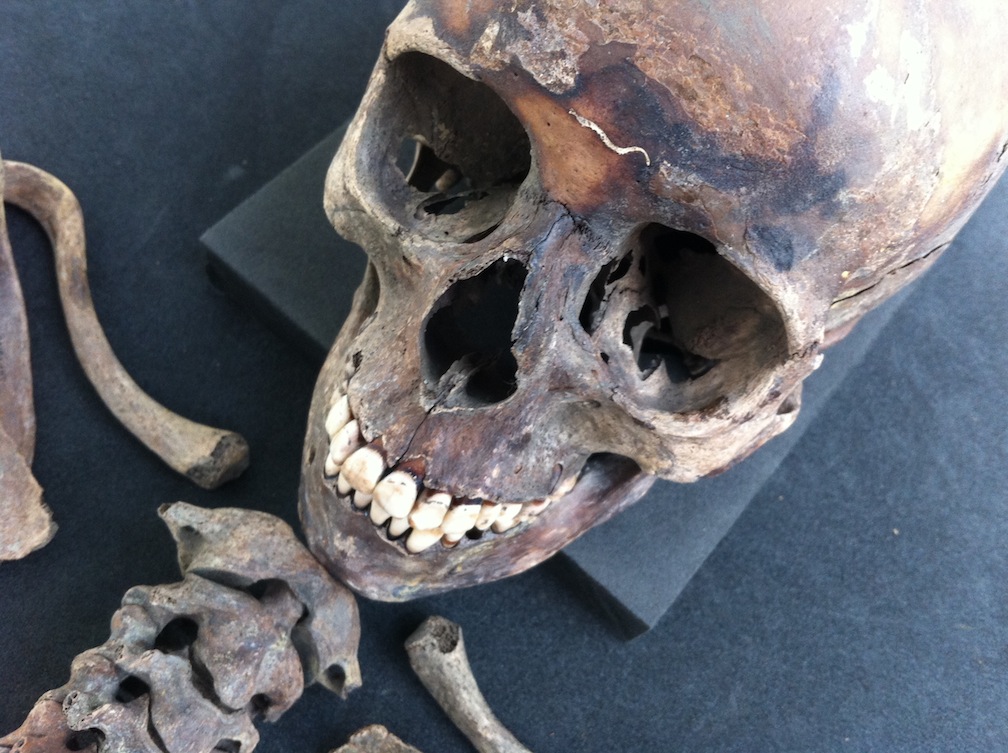
The premise for my work-in-progress is this: When 12-year-old London schoolboy Alex Papas is recruited by eccentric bazillionaire Solomon Daisy to go back to Roman London, his mission is to get information about a mysterious blue-eyed girl whose bones were discovered in a cemetery in Southwark. But things go wrong almost from the start and when Alex finds the girl he is totally unprepared for what happens next.
 |
| BUY THE BOOK! |
P.S. Ten Fun Things About London's Mithraeum.