Wednesday, January 26, 2011

A Day in Ostia


A Day in Ostia Antica: the ancient port of Rome
NB: The site of Ostia Antica is open almost every day of the year, EXCEPT Mondays

I first visited the site of Rome's ancient sea port one summer afternoon when I was a sixteen-year-old high school student on a study-tour from California. Like almost everyone I know who has visited Ostia, I fell in love with it. I wanted to go back in time so that I could wander its streets, watch a play in the theatre, visit one of its many baths complexes. That afternoon in Ostia was one of the experiences that prompted me to study Classics and become a Latin teacher. A few decades later, when I began planning my series of children's mystery stories set in ancient Roman times, I decided to have my main characters live in Ostia.


In Roman times Ostia would have been a busy port town, exotic and lively, brimming with people from all over the Roman empire: Greeks, Egyptians, Nubians, Jews, Syrians and Gauls. In the first century AD, Ostia's main function was to receive grain from Egypt and Sicily and to ship it on to Rome and its one million inhabitants. This grain was stored in Ostia's many warehouses and sometimes made into bread before being transported by barge along the winding Tiber to the capital city, fourteen miles away. In addition to the usual residents of a first century Roman town there would have been sailors, stevedores, ship-owners, storehouse managers, customs officers, rope-makers, sail-makers, and plenty of unsavoury types. When I asked one Classical scholar what ancient Ostia would have been like, he replied 'nowhere to bring up my child if I could avoid it!'

Today, Ostia is no longer bustling and dangerous, but quiet and peaceful. Over the past two thousand years the mouth of the Tiber has silted up, pushing the coastline away from Ostia. The site is landlocked and long deserted. Wandering around its ruins, you will find the remains of baths, temples, houses, shops, taverns, latrines and even a theatre. You can see traces of frescoes on the walls, half standing columns, marble thresholds and millstones from bakeries. One of the most distinctive features of Ostia are its black-and-white mosaics. They are everywhere.

Although Ostia is not as well-preserved as Pompeii, it's much more accessible (a single one way ticket will take you all the way from Rome) and much less crowded. If you are based in Rome, an excursion to Ostia is the perfect day trip. Wear a sunhat and trainers, and dress in layers. Ostia can be cool and foggy in the morning and blazing hot by the afternoon. From Rome, take the metro's Linea B to the stop called Piramide, then change by going up the escalator and down the steps into Porta San Paolo station for the 'light railway' to Ostia Antica. The last station on the Rome-Ostia line is Cristoforo Colombo. (Ostia Antica is the stop after Acilia and before Ostia Nord.) Get off at Ostia Antica and go out of the station and over the blue footbridge. Continue straight along a residential street and carefully cross the busy road on a blind curve opposite the restaurant called Allo Sbarco di Enea. Go past the restaurant (which will be on your right) and follow the road to the parking lot and ticket kiosk. For more detailed instructions go HERE.

Parents travelling with children might enjoy THIS ARTICLE by Nick Trend, a dad who took his children to Ostia.
Allo Sbarco Di Enea - The first thing you notice on your right, after crossing the main road, is a restaurant with chariots parked in its vine-shaded courtyard. Peer through the fence and you'll also notice statues, frescoes and a fountain. This is a touristy but fun place where all the waiters wear tunics. It's called Allo Sbarco Di Enea, which means 'Where Aeneas Got Off'. Aeneas was the Trojan hero who fled his burning city and eventually settled in Italy to become the father of the Roman people. The food is mediocre and the place only comes alive after 9.00pm - Italians eat late - but it can be a fun experience if you go with a big group.

The Thieves of Ostia, first in the Roman Mysteries series

Umbrella pines - Something else you notice about Ostia even before you enter the site are the pines. With their rough textured bark in shades of caramel, nutmeg and honey, their lofty fragrant canopies provide homes to chittering birds in winter and spring, chirring cicadas in summer and autumn. These trees offer cool shade in the summer and shelter from rain in the winter. Today, there are thousands of these beautiful trees in and around Ostia, making it one of the greenest suburbs of Rome.

The umbrella pine - pinus pinea - was a striking feature of the Italian coast even in Roman times. Pliny the Younger says the cloud emerging from Vesuvius looked like an umbrella pine, ie. a trunk-like column of smoke rising up and then flattening out at the top. Of course there are other trees in Ostia: cypress, poplar, oak, mimosa, myrtle, oleander and other species of pine, but for me the umbrella pine is Ostia's trademark. In my first book, The Thieves of Ostia, Flavia, Jonathan and Nubia catch their first glimpse of Lupus when he is trapped up one of these Ostian pines by some wild dogs. Today you can still see (tame) dogs lolling in the dappled shade among the tombs.

The Tombs - Romans were not allowed to bury their dead within the city but to made sure their departed relatives and friends were as close as possible, they placed tombs along main roads right up to the town walls. So tombs are the first thing you'll see when you enter the site of Ostia. They are fascinating, but leave them for later. Lupus, the youngest member of Flavia's gang, lived wild among the tombs of Ostia for two years after he escaped the clutches of Venalicius the slave-dealer.


The Roman Gate - There's not much left of the Porta Romana. In Flavia's time it would have been an impressive arch, faced with marble and flanked with statues of Victory and Minerva. Once you are 'inside' the town walls, look ahead and to the left. Beneath some umbrella pines, you can still see a long water trough for the thirsty mules that pulled carts to and from Rome. It is under the shade of those very trees that Flavia approaches two gaming cartdrivers to arrange transport from Ostia to Rome in The Assassins of Rome.


The Baths - The Romans loved their baths. In Flavia's time Ostia had a population of about 20,000 making it a relatively small town. But it was served by no less than 18 public baths complexes. Before you carry on down the main road, have a look at my favourite baths in Ostia: the Cartdrivers' Baths. You'll find them on your right, opposite the mule trough. Walk behind the remains of storehouses until you reach the modern tree-lined road giving access to archaeologists and site workers. Also known as the Termii Cisarii, the Cartdrivers' Baths were exclusively for the muleteers who drove carts to and from Rome. Look for the delightful black-and-white mosaic of four mules with their names written beside them. If you've read The Assassins of Rome, you'll know what their names mean: Pudes (Modest), Podagrosus (Lame), Barosus (Dainty) and Potiscus (Tipsy).

The Decumanus Maximus - Go back to the main road and carry on past the ancient shopping arcade towards the Baths of Neptune with their impressive black-and-white mosaics of tritons and sea-nymphs. A platform here gives a wonderful view not only of the mosaics but of the whole site. This road is the main road of Ostia and it's called the Decumanus Maximus. As at Pompeii, you can see the ruts made by a hundred thousand carts which carried grain and other goods to and from the port. (The round wishing-well in the centre of this road is medieval. Ignore it.) The Decumanus Maximus will take you past brick granaries and the marble theatre to Ostia's forum. Lupus runs down the Decumanus Maximus in The Assassins of Rome when he is trying to catch a cart and he almost knocks over a slave carrying a jar of urine. This liquid was very useful in the cleaning and bleaching of cloth, so ancient laundries (known as the fullers') would not have smelled very pleasant.

The Theatre - This was the one of the first buildings in Ostia to be excavated, over a hundred years ago, because its ruins were visible, poking up above ground. It has been heavily but accurately restored. As you enter beneath a cool arch, look up to see the elegant stucco decorations on the ceiling. In Flavia's time, the theatre held 2,500 people. Today it attracts cats, doves, wood pigeons and tourists of all nationalities. 


I was sitting here in May of 2000 eating pistachio nuts and an apple when I saw a party of Italian schoolgirls skipping rope on the grassy disused stage. One of the girls reminded me of Flavia. The mosaic portrait of Flavia on the front of the British editions is based on a drawing I made from my photo of Francesca. Sometimes, plays are still put on here in the summer months. Information and tickets can be obtained from the Ostia ticket kiosk at the entrance to the site. For more information check the Official Ostia website.

This elephant marks the office of beast importers of Sabratha
The Forum of the Corporations - located directly behind the theatre, this large complex was built on several storeys around a temple of Ceres. This is where guilds (or 'corporations') of ship-owners, marine-suppliers, importers and grain-traders had their offices and did business. Shaded by ancient umbrella pines, the delightful black-and-white mosaics illustrate the different offices. Elephants, boar, tigers marked the offices of wild beast importers, ships and images of Ostia's famous lighthouse indicated ship owners, and baskets with their leveling rods were for the grain-traders. Flavia and her friends come here in search of clues and interview a wild beast importer in The Twelve Tasks of Flavia Gemina.

The Forum - Go back to the Decumanus Maximus and into the forum, the main business centre of ancient Ostia. Here the dominating landmark is a big brick building atop a stepped platform. This temple to the Capitoline triad - Jupiter, Juno and Minerva - would have been faced with marble to cover the brick. Called the Capitoleum, this temple would have had a treasury in its basement. It is in the shadow of this temple that the evil slave-dealer Venalicius parades his slaves -- including the beautiful young Nubia -- in The Thieves of Ostia.

The Basilica - to the right of the Capitoleum - if you are standing on its steps looking out - is the Basilica of Ostia. Every Roman town had a basilica to house law-courts and magistrates' offices. Ostia's junior magistrate Marcus Artorius Bato works here. Flavia first meets him in The Thieves of Ostia but he appears again in later books to help the four with their investigations.

The Temple of Rome and Augustus - opposite the lofty red-brick temple of Jupiter, Juno and Minerva you will see the remains of the temple of Rome and Augustus. Flavia and Nubia come here in The Twelve Tasks of Flavia Gemina and find a clue in the face of the cult statue of Rome, personified as a beautiful Amazon with her foot on the globe of the world.

Roman Toilets - while you're in the Forum, don't miss Ostia's most amusing landmark, the twenty-four seater forica or public toilets, near the Temple of Rome and Augustus by the Forum Baths. Ancient Romans did their business right next to each other, with no doors or dividing walls. They sat chatting, gossiping, even extending dinner invitations. The holes on top of the cool marble bench are for the obvious thing. The holes at the front are for the sponge-stick, ancient Roman toilet paper. When you finished wiping your bottom with it, you put it in a basin of water for the next person to use! Lupus has obviously never been here, or he'd know a sponge-stick is not for beating a drum as he thinks in The Dolphins of Laurentum.

Shrine of the Crossroads - just past the Forum, the Decumanus Maximus ends in a fork. Crossroads were sacred places in Roman times and there was a temple here, where two lofty cypress trees stand today. Lupus comes here one cold December dusk during the festival of Saturnalia, and he makes some exciting discoveries.

The Museum - Ostia's museum only opens in the morning but doesn't take long to explore, so make sure you have a quick look before lunch. Ostia's finest statues have been brought here to keep them safe from robbers and from the elements.

The Bakeries - near the museum you can find a relatively well-preserved bakery. Ostia was the bread-basket of Rome. Huge shipload of grain from Egypt and Sicily were stored in beautiful red-brick warehouses before being towed on mule-powered barges up to Rome. Sometimes the grain was made into bread before it was transported, hence the many bakeries in Ostia. Notice the distinctive hourglass mills (grain grinders.) These would have been operated by blindfolded donkeys going round and round for hours. You can still see the circular trace of their hoofprints in the herringbone pattern of the brick floor. The Code of Romulus is a Roman Mystery short story partly set in an Ostian bakery.

The Synagogue - Built in the middle of the first century AD, this one of the oldest in the world. You will find it at the edge of the site, near perimeter fence. See the modern highway? That's where the ancient shoreline would have been. In fact, as you pass Ostia in a car, the synagogue is the building you can see most clearly. All that's left of it today are a few pillars and blocks of marble, but you can see Latin inscriptions in some of the marble paving stones. In spring swifts and swallows swoop in the warm air feasting on tiny bugs, and you can see butterflies fluttering among the columns and minuscule red spider mites on the coloured marble floor. Jonathan and his friends seek refuge in the synagogue when they are being chased by slave-dealers in The Thieves of Ostia. Later, in The Gladiators from Capua, the friends 'borrow' a disused cube of marble from beside the synagogue to make a tomb.

Flavia's house - Use your map to find your way through the long grasses from the synagogue towards the Laurentum Gate. Here in a quieter residential area of Ostia (these houses date from the time of Julius Caesar) you'll find the residence of Cartilia Poplicola, a young Roman widow who fancies Flavia's father. Moving back towards the entrance of the site, parallel with the Decumanus Maximus, you'll find a fullers', a mithraeum and more storehouses. What you won't find is Flavia's house, or Jonathan's, or even Green Fountain Street. I made a conscious decision to have my characters live in an unexcavated part of the town. One day I hope they'll build a life-sized reconstruction of their houses - complete with Roman frescoes, fountains, mosaics, furniture and fittings. Until then, you can sit in the shade of an umbrella pine munching olives, cheese and bread. Imagine that you are sitting in the tablinum (study) of Flavia's father, looking into the inner garden. (Another route to the site of Flavia's house is the little side road leading off the Decumanus Maximus just before the theatre.)

If you haven't brought a picnic lunch you can go back to the new snack-bar near the Museum. Here you can eat a delicious pasta or salad at parasol-shaded table on a pleasant terrace only a stone's throw from the Tiber River. Just the other side of this sunny courtyard is a bookshop where you can buy guide books and souvenirs, including a kit to make your own black-and-white mosaic of a dolphin. Oh, and the (modern) toilets are here! After lunch, explore the site. Let your feet guide you. Lose yourself in Flavia's world. Look out for landmarks from The Twelve Tasks of Flavia Gemina: inscriptions mentioning Cartilius Poplicola, a covered fountain, a many-spouted fountain, baths, stables and - near the Capitoleum - the wonderful Inn of Diana, just like the one where Lupus games with some men in a little courtyard.

Ostia Lido - After a day exploring Ostia, treat yourself to an ice cream and orangina down by the sea. Lido Centro (Central Beach) is only one more stop on the train line. Walk from the train station down to the seafront where you'll find dozens of beachside cafés with roofs of slatted bamboo and further north a marina with shopping. In the summer months its very lively here in Lido Centro, this is where modern Romans come to cool off. Off-season it's deserted, but you can still find somewhere to sit and wonder at how brave Roman sailors were. On blustery spring days the wind marches whitecaps across the brown water and makes the canvas awnings flap and crack. It was on this beach, or its ancient equivalent, that Flavia and her friends rescued Pliny the Elder, and received a Latin riddle that would set in motion an exciting adventure in The Secrets of Vesuvius. And of course the port plays an important part at the end of the last book of the series, The Man from Pomegranate Street, when the friends sail away for new adventures.


Caroline Lawrence on the beach at Ostia Lido (a few miles from Ostia Antica)

Some of the photos on this site are from The Roman Mysteries TV series. The rest are mine!

[The Roman Mysteries books are perfect for children aged 9+, especially those studying Romans as a topic in Key Stage 2. Viewers in some regions can watch season one of the Roman Mysteries on iTunes. For more fun things to do in Ostia, Rome and Pompeii, download the Roman Mysteries Travel Guide to your Kindle or tablet. Carrying on from the Roman Mysteries, the Roman Quests series set in Roman Britain launched in May 2016 with Escape from Rome.] 

Tuesday, January 25, 2011

Roman Beauty Tips

Pulchra's Beauty Tips [by Caroline Lawrence]


Millie Binks as Pulchra
I am very beautiful. That's why they call me Pulchra. Here are some of my beauty tips:

1. Every Roman girl would like pale skin like mine. The best way to keep your skin fair is to stay out of the sun or use a parasol. Some ladies use chalk powder but that is terribly obvious.

2. To give a natural blush to your cheeks, take a wine-cup with some dried wine in the bottom. Rub your finger gently in the powdered dregs, then brush lightly across your cheekbone. Use red-currant juice to stain your lips an attractive pink.

3. For mysterious eyes, use a little kohl. This is a very exotic, charcoal grey powder from far-away lands. On your make-up palette, mix the kohl with a little water and use a tiny brush to outline your eyes. Then smudge gently for a natural look.

4. For luminous eyes, brush some powdered stibium across the upper lid of your eye. Be careful! The skin is very delicate here.

5. Want to keep your hair glossy and clean? If your hair is oily, use egg mixed with vinegar, then rinse well. If your hair is dry, get your slave-girl to work the best quality olive oil into it, then rinse well with warm water and dry with a linen towel. Some people use a decoction of honey in warm water for the final rinse to give extra shine.

6. To tint your hair red, dye it with a mixture of henna and red wine. To lighten dark hair, use a mixture of vinegar and lye. Of course if the gods have blessed you with golden hair like mine, don't tamper with it!

7. Use pumice to smooth the rough skin on your heels. The best time is at the baths, between the massage and hairdresser.

8. You can also use pumice to keep your legs smooth and hair-free. Rub the stone briskly over your legs while your skin is dry. Some people suggest smearing your legs with rabbit blood to keep the hair from growing back but I think that's repulsive.


On the set of Roman Mysteries
9.
After your bath, when you've scraped off the oily dead skin, towel yourself briskly and re-apply a lightly scented oil to your face and body. Your skin will look dewy fresh and you'll smell nice, too.

10.
Oil of lemon is a very delicious fragrance and quite subtle. Use it on those special occasions when you really want to impress someone; a dark-eyed boy with curly hair, for example...

P.S. If you feel you simply must lose weight, you can find Celsus and Pliny's diet tips HERE.


See more of Pulchra and the "dark-eyed boy with curly hair" in the Roman Mysteries TV series! And peep behind the scenes of the filming of both seasons HERE


[The 17+ books in the Roman Mysteries series are perfect for children aged 9+, especially those studying Romans as a topic in Key Stage 2. The BBC made a TV series in 2007 and you can watch episodes via iTunes. Carrying on from the Roman Mysteries, the Roman Quests series set in Roman Britain launched in May 2016 with Escape from Rome.]

Monday, January 24, 2011

How to Make a Stola

OR HOW TO MAKE A ROMAN COSTUME
by Caroline Lawrence, author of The Roman Mysteries

Girl fans often ask me 'How can I make myself a toga so I can go to World Book Day dressed as Flavia Gemina or Nubia?'

First I set them straight. Only naughty women wore togas.

Roman men and boys wore togas, and they heartily disliked them. The toga was essentially a large blanket that had to be draped just so. You needed a slave to help put it on, so by the very act of wearing a toga you showed you were rich. If you are a boy and want to make a toga, you can use a big sheet. Good luck putting it on.

By the first century AD, when my books are set, the only women who wore togas were disreputable ones; and they had to wear them to show they had been (or still were) naughty. Respectable women wore stolas and good girls wore tunics, usually long-sleeved for modesty. (Technically the stola was a kind of apron-like garment that went on over the female tunic, with a strap over each shoulder, but I'm using the umbrella term stola here for a girl's or woman's tunic.)

If you are a boy and want to make a tunic, just wear a big tee-shirt, belted.

If you are a girl or woman and want to make a stola or girl's tunic, here is a simple way to do it. (below) I actually had to put this into practice once. I was on my way to an event in Newcastle and realised I'd left my costume in London. Luckily, a kind librarian donated a single sheet from her airing cupboard. I found one of those sewing kits you get free in hotels and frantically stitched it up in the back seat of the car as we drove to the event. When we arrived, my publicity manager Rowan loaned me her blue scarf and I used another scarf to tie up my hair. I added chunky ethnic jewellery and sandals and voila! I was a Roman lady...


Remember: the tunic is the tee-shirt thing, the toga or palla is what you wear over it. Of course you must always carry your sponge-stick (ancient Roman toilet paper) and your copy of a Roman Mystery with you!

For more information on Roman clothing, go to the article on ROMAN CLOTHING at vroma.com

And check out my blog over at The History Girls to see some of my other Roman wardrobe malfunctions.
lovely "extras" in The Slave-girl from Jerusalem

P. S. These two extras from the TV series based on my books are wearing lovely stolas, with pallas draped over their heads. 

[The Roman Mysteries are perfect for children aged 9+, especially those studying Romans as a topic in Key Stage 2. Carrying on from the Roman Mysteries, the Roman Quests series set in Roman Britain launched in May 2016 with Escape from Rome.]

Wednesday, January 19, 2011

1860s Minstrel Shows

I've been prospecting for primary source accounts of Minstrel Shows in the early 1860's... Here are a couple accounts lifted from Alf Doten's journals.

Sept 18, 1861- [San Francisco] Stephen & I went to Tuckers Academy of Music this evening - a sort of free and easy place - no ladies there - pretty good house - about 500 present - women waiters carrying round drinks cigars, &c that were ordered, among the audience - a long, varied and amusing performance - commenced with the male & female minstrels - 16 of them in all - Only 2 of them blacked, the tambourine (Walter Bray) and bones - ladies all in short skirts and tights - guitars, flutes, banjos, violins, &c - songs & grand chorus - jokes, conundrums &c - curtain fell - then followed lots of dancing, and songs, by single performers - pas de deux &c - whole wound up with a very laughable burlesque, entitled Norton the 1st or the Emperor of a day...

May 21, 1863 [San Francisco] evening I went to Gilbert's Melodeon - male and female minstrels &c ... songs, music, choruses, jokes &c  - Johnny De Angelis & Joe Murphy were blacked up - Grand medley walk around - best I ever saw - overtures, ballads, solos &c - Farce of the "Two Gregories" - whole concluded with the comic ballet of "the Vivandiere" - between pieces Md'lle Fleury, a French lady of fine operatic talents, appeared and sung, in all four ballads - "Napolitaine," "Don't let the Roses Listen" in English and two others in French - sings splendidly but speaks very poor English - The dancing was best I ever saw - Miss Lotta [Crabtree] is an A No 1 jig dancer but the comic little capering rogue of the evening was Jennie Worrell - She beats all I ever saw in her line - she danced some very comic, dashing, rattling, capering jigs and sung several comic and Irish songs - The whole performance was highly satisfactory and all the fun one could ask for one evening - No vulgarity...

Dec 26, 1863 [Como, Nevada] Evening performance Bryant & Case's minstrels - our troupe - doors open at 7 1/2 oclock - Martin & I played big drum, cymbals & fife in front of door half an hour - full house - 50 cts a ticket - lots of ladies present - at 8 oclock curtain rose - 8 of us on the stage - Cross's hall - Overture - sang several songs - plenty of gags, jokes, conundrums &c - Walk around by the company - I led the whole performance with violin - Lindsay played 2nd violin - Andrews did banjo a little - bones & tambourine - part 2nd, I & Lindsay were in the orchestra - solos, overtures, songs & dances, & little funny acts - were much applauded throughout the entire performance - Martin the Wizard followed with his trick  of the "magic rings" - then ventriloquism - & wound up with his dancing figures - the benches were then cleared away & we had a few quadrilles &c - I played - Lindsay helped some - we got nothing for it - The whole performance was a perfect success and a decided hit ... had terrible time washing black off tonight -

above: Martin the Wizard and his "magic rings" circa 1863

Wednesday, January 05, 2011

Mark Twain at work

I love these two glimpses into Sam Clemens' relaxed way of working. Both are taken from notes to the online collection of letters at the Mark Twain Project.

Mr. Clemens was a believer in personal comfort while at work. On hot days in particular he cast aside formalities—and a considerable portion of his clothing as well. At the outset he bought a comfortable lounging chair with a writing board hinged on to the arm, and it was no infrequent sight during the summer to find him nestled cosily in that chair, a pipe in his mouth and only a negligee shirt, trousers and socks in evidence as costume. His collar and shoes would most likely be in a waste basket and his hat, coat and waistcoat wherever they chanced to land when he cast them off. 
(Earl D. Berry, 1869)


Mark Twain relaxing
And there was Mark Twain in a little back room, with a sheet-iron stove, a dirty, musty carpet of the cheapest description, a bed, and two or three common chairs. The little drum stove was full of ashes, running over on the zinc sheet; the bed seemed to be unmade for a week, the slops had not been carried out for a fortnight, the room was foul with tobacco smoke, the floor, dirty enough to begin with, was littered with newspapers, from which Twain had cut his letters. Then there were hundreds of pieces of torn manuscripts which had been written and then rejected by the author. A dozen pipes were about the apartment—on the wash-stand, on the mantel, on the writing table, on the chairs—everywhere that room could be found. And there was tobacco, and tobacco everywhere. One thing, there were no flies. The smoke killed them, and I am now surprised the smoke did not kill me too. Twain would not let a servant come into his room. He would strip down his suspenders (his coat and vest, of course, being off) and walk back and forward in slippers in his little room and swear and smoke the whole day long. Of course, at times he would work, and when he did work it was like a steam engine at full head...
(from “How ‘Innocents Abroad’ Was Written,” New York Evening Post, 20 Jan 1883)

[The Case of the Deadly Desperados features the 26-year-old reporter Sam Clemens who will soon take the nom de plume Mark Twain. This Western Mystery for kids aged 9 - 90 is available in hardbackKindle and audio download. It will be published by Putnam & Sons in the USA in February.]

Sunday, November 28, 2010

Roman Poo & Pee

[WARNING: this blog entry contains excerpts from a talk I gave at the British Museum called "Ancient Romans & their Poo". It will make you go "Ewww!"]


When I first started studying Classics, I thought ancient Rome must have been nice and clean because of their marvelous engineering and the aqueducts that brought tons of water from miles away. I thought ancient Rome had luxurious bath-houses and sparkling white marble columns and steps, like this scene (right) from the 1953 film Julius Caesar. I thought everybody wore nice clean tunics and no rubbish marred the streets. And of course Romans used sponges-on-sticks as toilet paper. The next best thing to puppy-soft Andrex. (read more in my blog So What's with the Sponge-Stick?) What could be more sanitary than a soft sea-sponge on a stick?

toilet in shape of chariot
However, as I researched my books and travelled the world, I realized that Rome was probably more like a hot, crowded third-world city: Calcutta, Marrakesh or Cairo. Roman cities would have been colourful but also dirty, crumbly, smelly and very unsanitary. There would have been human and animal dung in the road, plus pee, dead animals, flies, sick and infected people, tainted water, sour wine, mud, blood, rotting vegetables and rubble. Romans didn't know about bacteria or germs, so in many Roman homes you often find the toilet is right next to the hearth in the kitchen. Very rarely do you find a toilet like this luxurious marble one from the Baths of Caracalla, (shaped like a chariot in case you need to go in a hurry!)

In my first book, The Thieves of Ostia, Vespasian is Emperor.

One ancient Roman described Vespasian's expression as that of a man sitting on the toilet trying to do a poo. Here he is (right) with his son Titus. Both these portraits are upstairs in the British Museum. What do you think? Does Vespasian have a strained expression on his face?

When Vespasian was emperor he did several eccentric things, including putting a tax on urine. The ancient version of dry-cleaners were called fullers and they used urine (pee) for part of their cleaning process. (In fact the Latin word for urine is lotium and is linked to the word for wash.) The fullers often had pots outside their establishments where men could stop to pee. They also bought urine from the public latrines, and this was when the tax was paid.

Soon after this urine tax was imposed, Roman wits started calling piss-pots "vespasians". Embarrassed, Vespasian's son Titus asked his father why he insisted on making money by taxing smelly urine. Vespasian pulled out a sestertius and asked Titus to sniff it. "So?" shrugged Titus. "You see," said Vespasian. "Money doesn’t stink."  Some people in Germany liked this story so much that they made a family board game based on going to the toilet in Roman times! It’s called PECUNIA NON OLET which means "money doesn’t stink." Sadly, it doesn't exist in English.

In my second book, about the eruption of Vesuvius, I investigated the different types of graffiti on Roman walls. As well as the Christian graffiti that appears in this book they wrote things like DON'T POO HERE! We also know from inscriptions and graffiti that there were often queues outside the public loos! That meant the public latrines - the foricae - were heavily used and therefore probably quite filthy.

Romans didn't have soap. Instead, they had olive oil. They would go into the baths, strip off and rub scented olive oil all over their bodies. After some exercise and maybe a session in the steam room, they would then scrape it off with a bronze knife thingy called a strigil. Then they flicked this oily mixture of dead skin, oil, sweat and dirt (called gloios) onto the floor by the drains. They did this in the public baths. Imagine if you used your public swimming pool to get clean… along with all the neighbours on your block, young and old, healthy and sick. I used to belong to a health club until I found out people kept getting sick from going in the jacuzzi, the warm tub. If that can happen in today’s world, think how icky it must have been in Roman times!

a Roman chamberpot
In The Charioteer of Delphi, my characters Jonathan and Lupus go to the new Baths of Titus near the Circus Maximus in Rome. Jonathan finds something floating in the hot plunge. This probably happened a lot, unless pools were cleaned regularly. In addition to floaters, imagine a thin scum of dead skin, hair and scabs floating on top of the pool. As well as a scum on the water, think of what would cover the floor. Slippery gloios, spilled oil, and also crumbs from snacks, which we know people ate in the baths. It’s no wonder Pliny the Elder tells us that cockroaches loved the warm and steamy Roman Baths.

Because the Romans didn’t really understand about hygiene, there were probably flies everywhere. Vespasian’s younger brother Domitian used to amuse himself by trying to spear lazy summer flies with his stylus (the sharp implement used to write on wax tablets). One day a man went to see Domitian and asked his Greek scribe if there was anyone else in the room with the Emperor's younger brother. “Nobody,” replied the secretary dryly. “Not even a fly.”

Zoe from Blue Peter drinks pee?
My seventh Roman Mystery, The Enemies of Jupiter, has lots of gruesome facts about medicine and doctors. Doctors were called "dung-eaters" because some of them sipped your pee and tasted your poo to diagnose what was wrong with you. In that book I also tell how one doctor bleached his teeth by drinking his own urine! When I was on Blue Peter a few years ago I convinced presenter Zoe to try some urine teeth-bleaching mouthwash. She didn't like the taste! (Of course she was just pretending.) You can watch the clip on YouTube; the Roman beauty bit starts 4 minutes in. (That's me standing behind Zoe, in the unbleached stola.)

The Sirens of Surrentum is full of passion and poison. For this book I researched half a dozen deadly plants and their antidotes and learned some more fascinating facts. For example, everybody knows an antidote is something you take to stop poison taking effect. But what most books and TV shows don’t tell you is that an antidote counteracts poison by getting your body to expel it, either by vomiting or pooing! Or both.


In The Fugitive from Corinth, a Roman Mystery set on the Greek mainland, somebody accidentally empties a chamberpot out of a tavern window onto somebody down below! What is a chamberpot? It’s a pot you keep underneath your bed or in a corner of your room as a portable toilet. One Latin word for chamberpot is matella, which usually means a narrow necked flagon. Other words were pelvis, scaphium and situla. A Roman poet called Martial wrote an epigram about a  chamberpot "peeing from a chip in the side". (Epigram XII.32) Some scholars think chamberpots might have been more hygienic than toilets over pits or sewers. This is because animals might crawl out of the pit or sewer and track bacteria from poo onto food and bedding.

title card for my British Museum talk
There have always been urban myths about creatures climbing up out of the sewers or toilet. You can read more about this on my blog called Demon in the Toilet. You might think the Romans were silly and superstitious to believe there were demons in the loos. But in her forthcoming book, Roman Toilets: their Archaeology and Cultural History, Dr Gemma Jansen, a Dutch archaeologist, suggests that demons were the ancient Roman equivalent of bacteria. I think that is a brilliant idea. Like demons, bacteria are virtually invisible, but frightening because of what they can do to you… If a demon possessed you, he could make you sick or even kill you. Just like bad bacteria, germs or viruses.

don't worry; it's fake
There may not be pigs, alligators or demons in the loo, but there are germs. We know what the poor Romans didn't know: to wash our hands after doing a poo or a pee!

P.S. Thanks to everyone at the British Museum, and to all the kids who brought their parents to my talk, and to all of you brave enough to touch my fake dog poo. It was "sticky and stretchy"... Ewww!

P.P.S. If you want to know which of my Roman Mysteries has the highest 'yuk' factor it is probably The Enemies of Jupiter, now available as ebook and audio, as well as in the old fashioned format!

[The 17 books in the Roman Mysteries series are perfect for children 9+ studying Romans as a topic in Key Stage 2. The Roman Mystery Scrolls series is aimed at kids aged 7+ and the Roman Quests series, set in Roman Britain, is a follow on for kids 9+]

Tuesday, November 23, 2010

Western Road Trip movies

If I were to compile a mini film festival for our recent Western road trip it would include these films:

for White Stallion Dude Ranch near Tucson, AZ:
City Slickers (1991) about tenderfeet at a Dude Ranch
City Slickers II: The Legend of Curly's Gold (1994) more of Mitch, Norman & sore bottoms
Backlash (1956) to remind us of the landscape we rode through
Tombstone (1993) filmed in and around Old Tucson Studios, which we loved!

for Sedona, AZ
Broken Arrow (1950) scenes filmed at Cathedral Rock in stunning Sedona, AZ

for Oatman, AZ
How the West was Won (1962) the quirky Oatman Museum was in this film

for Kingman, AZ
Two Lane Blacktop (1971) classic road trip movie filmed at Kingman, Arizona

for the Grand Canyon, AZ
Grand Canyon (1991) about what matters in life with a final scene at the Grand Canyon
Edge of Eternity (1958) you can still see wrecked car at Guano Point, West Rim of the canyon
Thelma and Louise (1991) another dramatic final scene at the Grand Canyon

for the Hoover Dam, AZ/NV
Viva Las Vegas (1964) this fun Elvis film has scenes at Hoover Dam as well as Las Vegas

for Las Vegas, NV
Oceans 11 (2001) a little less conversation, a little more action!

for Death Valley, CA
One Eyed Jacks (1961) Marlon Brando in Death Valley
The Law & Jake Wade (1958) so-so western with good scenes in Death Valley
Zabriskie Point (1970) wacky hippie film with scenes in Death Valley (including Zabriskie Point) 

for Yosemite, CA
Star Trek V: The Final Frontier (1989) opening scenes: Captain Kirk climbs El Capitan

(Check out my Western detective books for kids at carolinelawrence.com)

Sunday, November 21, 2010

Spittoons!

"The past is a foreign country; they do things differently there."

Only a century and a half ago things were very different in America. If you go to a museum or a restored shop like the excellent Village Store in Woodside, California (right) you'll find lots of mysterious objects. Would you recognise a carpet-beater, a butter pat, a washboard or a button-hook? Probably not, but your great great grandmother might have used these objects every day. Would you know what to do with a bullet-mould, a powder horn, hard tack or a dipper? Your great, great grandfather would have!

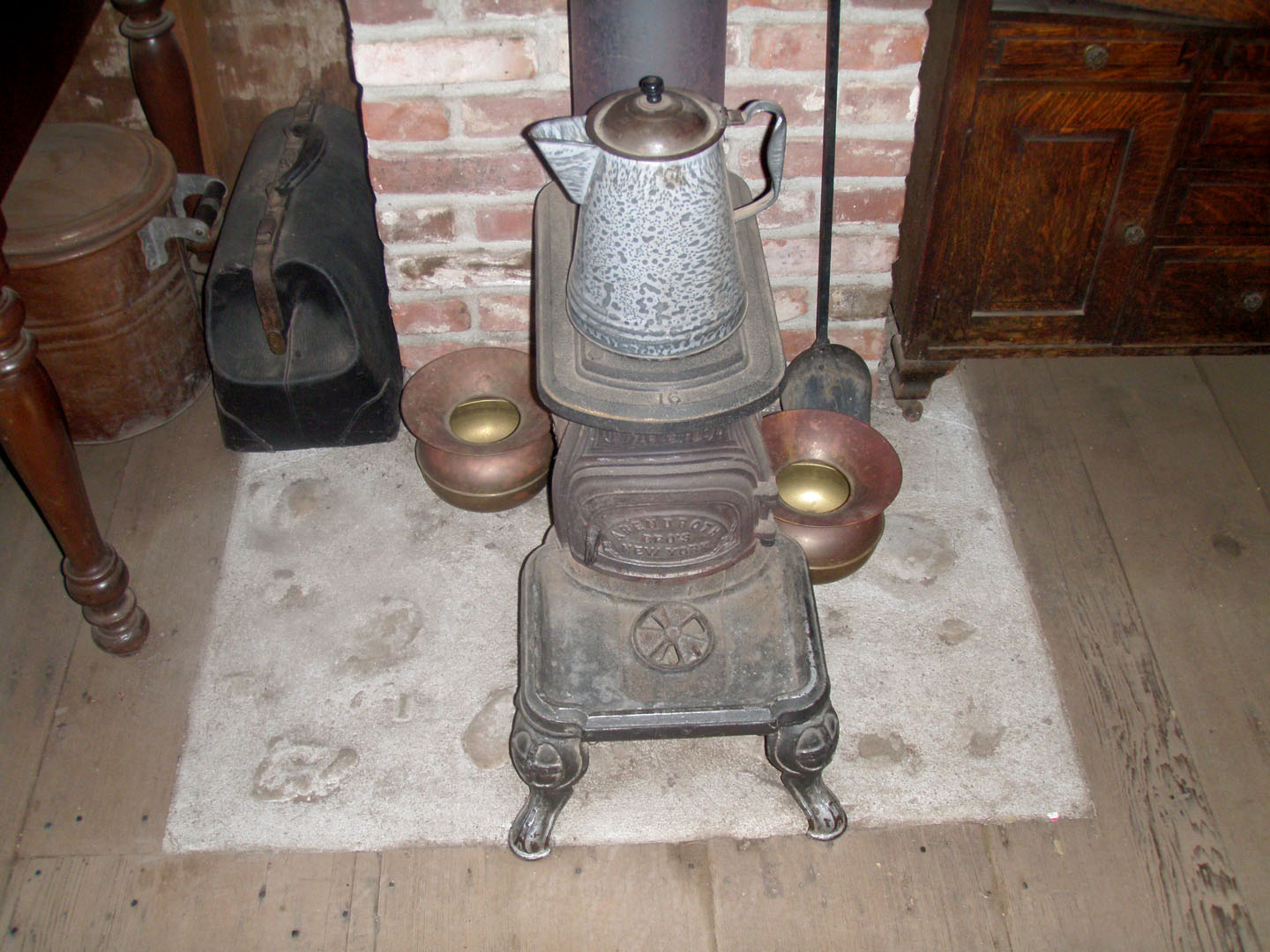
One of the strangest artifacts you might see is a small copper or earthenware basin on the floor. Some of these are chamber pots (portable toilets) but the brass ones (and the ceramic ones with a funnel-type hole in the tops) are spittoons.

What is a spittoon?

In the 19th century, chewing tobacco was extremely popular in America. Instead of smoking tobacco in a pipe (fiddly), lighting up a cigar (expensive) or rolling a cigarette (effeminate) lots of westerners chewed tobacco.

It was sold in bricks or twists (right) and some stores had a chopper so you could order as much or as little as you wanted.

To get a nicotine buzz you would place a small amount of tobacco in your mouth between gum and cheek and let it stew. Although it's called "chewing tobacco" you don't necessarily have to chew it. The drug in the tobacco leaf gets into your blood system from just having the chaw in your mouth. It made you salivate but you didn't swallow or you would be sick. After you had the piece of tobacco in your mouth for a few minutes, you would spit it out, along with the yellow brown saliva.

In the 1800's, there were spittoons in almost every public place. Men would spit into them - sometimes missing and hitting the floor or wall around them. My mother remembers the smell of Bakersfield City Hall in the 1940's where there were still spittoons. She says the smell was rank and revolting. She also remembers when some private houses had spittoons. One hostess used to put paper on the walls and floor around the spittoon in case the spitters missed!

When a spittoon was full of smelly yellow-brown spit, some unfortunate person would have to take it outside to empty it. Some spittoons had a hole in the side for pouring out the accumulated spit. Others had the simple hole at the top. You poured it out the same way you poured it in.

At the Mark Twain exhibition at the Museum in Angel Camp, Calaveras County, I spotted a famous type of spittoon. This is large and made of glazed brown ceramic. It has a funnel-shaped hole on top. But it also has a triangular hole at the side for pouring out the spit. This is the same type of spittoon archaeologists found in Virginia City underneath Piper's Saloon. I showed it to the woman who was working at the museum that afternoon. She didn't realise it was a spittoon even though her boyfriend has been chewing tobacco since he was fourteen. He doesn't use a spittoon. If he's outside, he just spits on the ground. If he's inside, he uses a coffee cup. Ew.

When I did a bit more research, I found out that over FOUR MILLION American teenagers chew tobacco today. Yes, today. In the 21st century. Many of them think it's less dangerous than smoking but as this excellent article tells, it's not. Chewing tobacco can give you sores, tumors, and even cancer.

I hope P.K. Pinkerton, the hero of my new Western Mysteries series, never starts chewing tobacco.

Monday, November 15, 2010

Kirk & Spock at Yosemite

We are staying at the wonderful Ahwahnee Hotel in Yosemite, because I hope to set one of my books here.

Built in the late 1920s of stone, wood, steel and glass, it's like a wonderful country club set in the middle of some of the most stunning scenery in the world. I love primitive abstract art and this place is heaven for me. There are Turkish kelims on the walls, baskets in glass cases and Native American inspired designs on the ceilings and mantlepieces.

With its with massive open fires and a lofty dining room a hundred feet high the Ahwahnee feels like the lodge of a millionaire trapper. There are over 100 bedrooms as well as fun communal areas including secret retreats like the Mural Room. This is where I sipped hot chocolate early one frosty morning and watched the deer wander by. There are bears around here, too, and warnings everywhere not to feed them or leave even an empty potato chip packet in the car.

"Do you ever have bears come in here?" I ask a female member of staff who is watering the plants.

"Only in summer when the doors are open and they smell food," she replies.

"What do you do?" I ask.

"We shoo them away!"

The hotel is open to the public so you don't have to stay here to enjoy the benefits. Campers and hikers drop by to thaw out in front of one of the many fireplaces or have a cocktail called "firefall" made with chocolate liqueur and chili powder. Yum. (The "firefall" cocktail is inspired by the now defunct practice of pouring coals over the top of a waterfall at Glacier Point when it was dry in the summertime. This gave an effect of a waterfall of fire, or firefall. Kids: don't try this at home)

The Ahwahnee has hosted many famous people from Queen Elizabeth to JFK. Robert Redford worked here for a while and Judy Garland sojurned here while working on a film. But most exciting to me was finding out that some of the crew of Star Trek stayed here, too!

In 1988 William Shatner, Leonard Nimoy and others stayed in the Ahwahnee while filming some scenes for Star Trek V: The Final Frontier. In the opening scenes, Captain Kirk is relaxing by free-climbing the appropriately named El Capitan peak in Yosemite.

Suddenly Spock appears in his hover boots.

Spock: "Greetings, Captain. I do not think you realise the gravity of your situation."

Kirk: "Whoaaaaaaaaa!"

This scene was mainly filmed at Tunnel View, with its vista of El Capitan, Half Dome and Bridalveil Falls. (The guide books all say it was for Star Trek IV, but trust me - a die-hard Trekkie - it's Star Trek V.)

Shatner was involved in writing the script and in this charming film clip he wonders what his subconscious was trying to tell him when he wrote the words Kirk is free-climbing El Cap in Yosemite. "This is the mecca for climbers from all over the world," muses Shatner in the film clip. "Spock asks Kirk why he's climbing this mountain. Kirk says: Because it's there... An answer that fends off the true answer... The mountain is climbed because I think the climber wants to hug the mountain... There is a passionate affair going on between the climber and the mountain."

Bill, I love you, but I think you had one too many "firefalls" at the Ahwahnee that afternoon!